
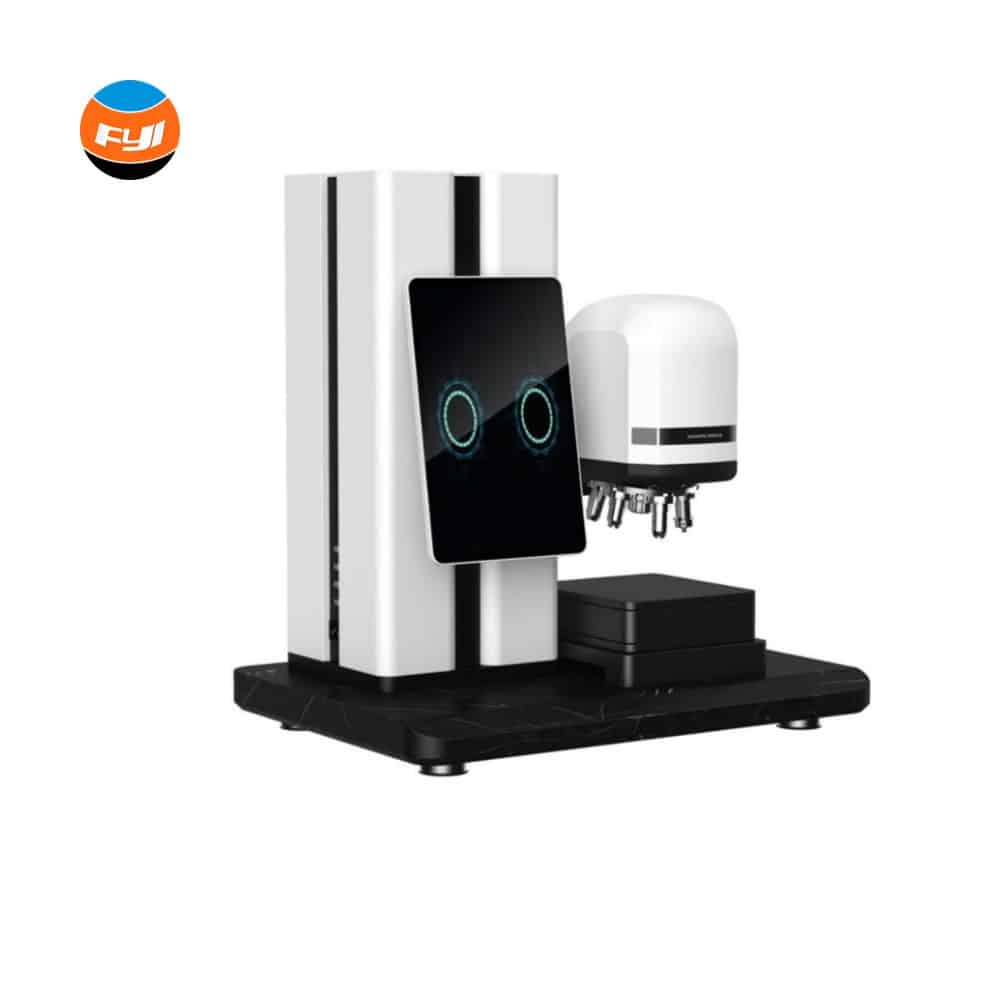
Automatic Hardness Tester SCV-6
Automatic hardness tester is widely used in the hardness test of various materials such as steel, non-ferrous metals, IC chips, thin plastics, metal foils, plating, coatings, surface hardening layers, laminated metals, hardening depth of heat-treated carburized layers, as well as hardness tests of cemented carbide, ceramics, etc. At the same time, it is also suitable for the hardness test of thin plates, electroplating, welded joints or deposited layers, providing strong support for material science research and industrial quality control.
Automatic Hardness Tester SCV-6
The SCV-6 Automatic Hardness Tester uses closed-loop control to reduce the test cost and the influence of the operator on the test results. It can help you complete efficient and cost-saving small-force hardness tests. It is a precision testing instrument that integrates advanced technology and high precision, and is designed to meet the testing needs of diverse materials. It uses electronic loading and has a wide range of test forces, from 10g-50kg, which fully covers the test forces commonly used in the industrial field and can flexibly respond to the hardness test challenges of various materials. Its excellent performance and flexible configuration provide all-round support and guarantee for your material testing. The machine can perform single-point and multi-point testing, including the following methods:
Vickers hardness, Knoop hardness
The hardness testing system is suitable for fully automated hardness testing using the following test methods:
Case hardening depth (CHD),Determination of conventional hardening depth after surface heating (DS);
Determination of hardening depth after nitriding (Nht), weld inspection of steel pipes.
Here are the features of the machines:
- Z-axis electric focus: quickly and accurately find the focus plane, improve test efficiency, make the test process more automated, and reduce the difficulty of use for operators.
- Advanced optics and safety technology: The unique optical system ensures clear images, and the perfect combination with safety anti-collision technology ensures safety during the test.
- The measuring microscope adopts high-definition camera technology and an automatic turret for the indenter. It can be optionally equipped with a six-station model with four measuring objective lenses and two indenters .
- Equipped with a panoramic camera to photograph the sample surface .
- Digital zoom and powerful test system: The digital zoom function provides the largest range of magnifications, combined with long working distance objectives and
- high-precision automatic stages to build a powerful test system to ensure the accuracy of test results.
- Highly integrated and intelligent: All hardware and software are carefully designed and assembled, integrated into one, which improves the intelligence of the hardness tester while ensuring the stability and reliability of the test results.
- Customizable test space: The test space and workbench can be customized according to specimens of different sizes to flexibly adapt to various test scenarios.
- Image recognition system: It uses a unique algorithm with strong recognition ability and high precision to ensure accurate measurement and further improve test efficiency and accuracy.
APPLICATION
Application of Automatic Hardness Tester
Automatic hardness tester is widely used in the hardness test of various materials such as steel, non-ferrous metals, IC chips, thin plastics, metal foils, plating, coatings, surface hardening layers, laminated metals, hardening depth of heat-treated carburized layers, as well as hardness tests of cemented carbide, ceramics, etc. At the same time, it is also suitable for the hardness test of thin plates, electroplating, welded joints or deposited layers, providing strong support for material science research and industrial quality control.
If you need more information about the machine, please contact with us.
Key specification
Key Specifications of Automatic Hardness Tester
| Hardness test range | 5-3000HV, widely covering the hardness test range of various materials. |
|---|---|
| Test force | ranges from 10gf to 50kg , adapting to the test requirements of different materials. |
| Implementation standards | in accordance with GBT4340, ISO 6507, ASTM 384 and other standards. |
| Automatic workbench | XY motorized sample stage and Z-axis control. |
| Table size | 120 x 120 x 55 mm |
| XY travel | 50mm*50mm ( large stroke workbench can be customized ) . Displacement repeatability < 2um; XYZ displacement resolution can reach 2um . |
| Minimum step size | less than 1 micron. |
| Moving speed | The speed is adjustable when the plane moves. |
| Test force application method | automatic loading, dwell and unloading, easy and quick operation. |
| Switching between indenter and objective lens | automatic switching improves test efficiency and reduces human errors. |
| Indenter | diamond Vickers indenter: 1pc |
| Objective lens magnification | 10x, 20x, and 50x objective lenses are available tomeet the needs of detailed observation. |
| Number of workstations | 5 workstations to meet different testing needs. |
| Conversion scale | supports conversion of multiple hardness units such as HRHBHV, which is convenient for users to conduct comparative analysis. |
| Test force dwell time | 1-99s adjustable to meet the dwell time requirements under different test conditions. |
| Maximum specimen height | 170mm (customizable), to meet the testing needs of specimens of different sizes. |
| Throat | 135mm (customizable), ensuring the stability and reliability of the test process. |
| Vickers indentation measurement system | precise measurement to ensure the accuracy of test results. |
You must be logged in to post a review.
Reviews
There are no reviews yet.