Understanding Textile Dyeing Technology and Fabric Coloration
Fabric dyeing is one of the most critical stages in textile processing, directly determining the final appearance, quality, and market value of fabrics. Different fibers, dyeing methods, and dye types all influence the color effect, colorfastness, production efficiency, and fabric performance. With the continuous development of textile manufacturing, modern dyeing technology has evolved from simple coloration into a systematic process involving precise control of temperature, chemistry, machinery, and process parameters. This article introduces the fundamental workflow of fabric dyeing, explains the core dyeing principles, and outlines common dyeing methods and dye categories to provide a clearer understanding of textile dyeing technology and industrial applications.
Fabric processing workflow

Among these steps, dyeing can be categorized into yarn dyeing (dyeing the yarn prior to weaving) and garment dyeing (dyeing the fabric after it has been sewn into a finished garment); it constitutes the pivotal stage that determines the fabric’s color and shade.
Dyeing
Also referred to as coloring, this term denotes the processing procedure in which dyes undergo chemical or physicochemical bonding with fibers, thereby imparting specific color shades and colorfastness properties to the entire textile material. Through dyeing, fabrics can be endowed with a wide array of desired colors, thereby satisfying diverse aesthetic requirements.
Dyeing Concentration: Typically expressed as “% (owf),” where “owf” stands for “on weight of fabric.” This signifies the “percentage relative to the weight of the fabric”—specifically, the ratio of the dye quantity used to the weight of the fabric being dyed—and serves as a critical metric for controlling the depth or intensity of the color shade.
Dyeing Conditions: The ultimate dyeing outcome is determined by six core elements, all of which are indispensable:
● Substrate: Primarily refers to yarns or fabrics; the material composition of the substrate directly influences the selection of dyes and the specific dyeing process employed.
● Dyes: Encompasses the specific types and inherent characteristics of the dyes, which must be carefully matched to the material of the substrate being dyed.
● Medium: Typically consists of water or auxiliary paste agents; the medium serves to dissolve the dyes, regulate the chemical environment of the dye bath, and ensure the uniform dispersion of the dyes.
● Dyeing Method: Refers to specific techniques such as exhaust dyeing (immersion) or pad dyeing; different methods are suited to different fabric types and production requirements.
● Temperature × Time: Temperature governs the reaction rate of the dyes, while the duration of the process influences the degree to which the dyes are fixed onto the substrate.
● Application of Auxiliaries: Includes agents such as leveling agents and fixing agents, which serve to enhance the uniformity of the dyeing process and improve colorfastness.
Dyeing principle

The “dyeing-up” process of dyes on fabrics is divided into four sequential steps, ultimately resulting in the uniform adhesion of color:
● Transfer of dye from the dye liquor to the fiber interface: Dye molecules diffuse within the dye bath, gradually approaching the surface of the fiber;
● Diffusion of dye toward the fiber and adsorption onto the fiber surface: Through physical or chemical interactions, the fiber surface adsorbs the dye molecules onto its exterior;
●Then diffusion of dye into the fiber interior and fixation: The dye molecules adsorbed onto the surface further penetrate into the interior of the fiber, binding with the fiber molecules to become fixed;
● Attainment of equilibrium in dye concentration between the fiber interior and exterior: As the dye continues to diffuse and become fixed, the concentration of dye within the fiber interior gradually equalizes with that in the external dye liquor, and the dyeing process stabilizes.
Common staining methods

●Immersion Dyeing: A method in which textiles are completely submerged in a dye bath, allowing the dye to be absorbed by and fixed onto the fibers. It is characterized by batch-based production—resulting in relatively lower production efficiency—yet utilizes simple equipment (such as laboratory sample dyeing machines or overflow dyeing machines), involves minimal operational complexity, and is suitable for a wide variety of fabrics. Currently, widely adopted techniques such as jet dyeing, airflow dyeing, jig dyeing, and yarn dyeing all fall under the category of immersion dyeing.
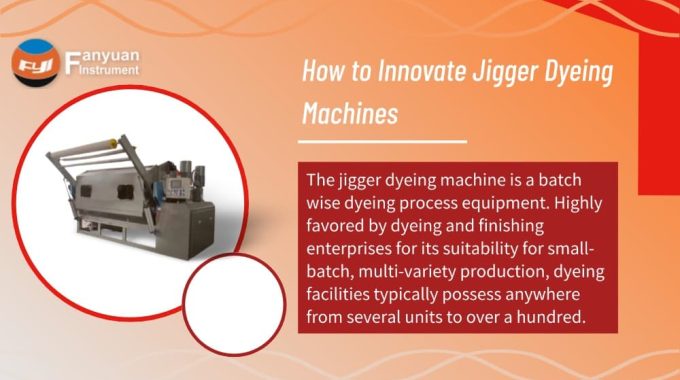
● Jigger Dyeing: This process requires the use of a jig dyeing machine (the core components of which include a dye bath, heating elements, a motor, a frequency converter, and a tension controller). The fabric, wound in a roll, is repeatedly immersed in and squeezed through the dye bath to achieve coloration. The operating principle involves a motor driving rollers to rotate, thereby guiding the fabric to cycle through the dye bath; simultaneously, heating elements regulate the dye bath temperature, while a tension controller ensures uniform fabric tension to prevent creasing.
● Airflow Dyeing: This technique relies on an airflow dyeing machine (comprising a main vessel, a dye liquor circulation system, a heat exchanger, a blower, and nozzles). A stream of air generated by the blower atomizes the dye liquor, ensuring intimate contact between the dye and the fabric. The atomized dye adheres more uniformly to the fabric surface, and the airflow helps minimize fabric friction, making this method particularly suitable for fabrics requiring a high degree of softness. During operation, parameters such as temperature and airflow velocity are regulated via a programmable control panel.
● Yarn Dyeing: A dyeing method specifically applied to yarns, utilizing either package dyeing machines or hank dyeing machines. In package dyeing, yarn is wound onto cylindrical packages before being loaded into the dyeing machine, where the dye liquor permeates the packages to effect coloration. In hank dyeing, the yarn is bundled into hanks (skeins) and suspended within the dyeing machine to react with the dye liquor. Yarns dyed using these methods can be used directly for weaving patterned fabrics.
● Pad Dyeing: The process involves briefly immersing the fabric in a dye bath, followed immediately by passing it through a set of squeeze rollers (nips). This mechanical pressure forces the dye liquor into the interstitial spaces of the fabric, ensuring a uniform distribution of the dye. The final fixation of the dye onto the fibers is not completed during the initial immersion stage, but rather achieved during subsequent post-treatment processes, such as steaming or baking. Pad dyeing is a continuous dyeing process characterized by high production efficiency, making it suitable for the large-scale dyeing of woven fabrics. Commonly used equipment includes laboratory pad-dyeing machines and continuous pad-dyeing machines.
Common dyes and their characteristics
Common Dyes and Their Characteristics: Different fibers require specific, corresponding dyes. The common dyes and their characteristics are outlined below:
● Direct Dyes: Water-soluble dyes characterized by a simple dyeing process, low cost, and a comprehensive color spectrum; however, their shades lack vibrancy, and they exhibit relatively poor wash fastness. They are primarily suitable for cellulosic fibers (such as cotton and viscose).
● Reactive Dyes: Water-soluble dyes featuring low cost, a complete color spectrum, and vibrant shades. They offer excellent dyeing performance (including superior color fastness) and are suitable for cellulosic fibers and silk protein fibers.
● Disperse Dyes: Water-insoluble dyes available in a wide variety with a full color spectrum and excellent color fastness. However, they exhibit relatively poor sublimation resistance (prone to discoloration at high temperatures) and are primarily used for polyester fibers, modified polyester fibers, and acetate fibers.
● Acid Dyes: Water-soluble dyes available in a wide variety with a full color spectrum. They feature vibrant shades and excellent color fastness, making them suitable for silk protein fibers and nylon fibers.
● Cationic Dyes: Water-soluble dyes characterized by a complete range of tones and vivid shades. They demonstrate excellent overall fastness properties (particularly light fastness) and are specifically designed for acrylic fibers.
Conclusion
Dyeing plays a decisive role in textile production by giving fabrics their color, functionality, and commercial appeal. From immersion dyeing and pad dyeing to airflow and yarn dyeing, each method offers unique advantages depending on the fabric type and production requirements. At the same time, selecting suitable dyes is essential for achieving the desired shade, fastness, and fabric performance. A comprehensive understanding of dyeing conditions, dye-fiber interactions, and processing techniques helps manufacturers improve product quality, production efficiency, and consistency. As textile technology continues to advance, modern dyeing processes are increasingly focused on precision, sustainability, and higher performance standards.
Copyright Notice: Some materials are sourced from the internet. If any copyright issues arise, please contact us, and we will address them immediately.