
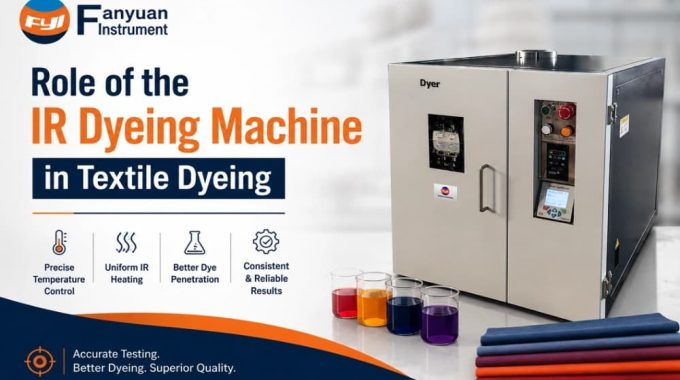
Role of the IR Dyeing Machines in Textile Dyeing
An IR dyeing machine is a specialised device used for consistent dyeing in the laboratory, using infrared heating to accurately control temperature, ensure uniform dye penetration, and maintain consistent dyeing results. It is essential for colour matching, dye formulation, process optimisation, and quality testing during the manufacture of bulk textiles.
This article explains the function of the IR dyeing machine in fabric processing, the reasons why it improves dye penetration, offers better energy efficiency than steam dyeing, and the importance of temperature control to reduce common dyeing defects. Stay with us!
Typical Applications of IR Dyeing Machines in Fabric Processing
The most common applications of an IR dyeing machine include laboratory dyeing, colour matching, dye formulation, dye sample development and quality control. It assists textile companies in testing dyeing procedures before scaling them up to production using bulk dye.
Laboratory Dyeing
A wider use of the IR lab dyeing machine is to test and optimise dyeing parameters of dye formulations in small samples of the fabric before large-scale production.
Color Matching
The machine provides a reliable shade development and matching of colours, so a number of production trials have to be repeated, resulting in less material wastage.
Sample Development
In an infrared dyeing machine, the dyeing of sample fabrics is carried out to obtain the sample fabric for customer approval, product development and new textile collection.
Quality Control Testing
An IR beaker dyeing machine allows for the uniform testing of the dyeing performance, colour reproducibility, and reliability of the process, which is essential to achieve the quality standards of dyeing.
Research and Process Optimisation
An Infra Color dyeing machine can be used to test new dyes, auxiliaries and dyeing techniques, which can enhance the efficiency and consistency of textile laboratories.
How IR Dyeing Machines Improve Dye Penetration
The dyeing machine improved dye penetration to ensure uniform infrared heating and accurate temperature control, which will lead to better dye penetration. This enables equal distribution of dye molecules inside the textile fibres, which produces a more uniform colour and increased dye fixation, and repeatable laboratory results.
Uniform Infrared Heating
The even heating of each dyeing beaker, by an infrared dyeing machine, removes the problem of hot and cold spots that may lead to uneven dyeing. Uniform heating is important when dyeing disperse dyes to 100% polyester, for example, to ensure that the entire fabric sample is dyed the same color.
Precise Temperature Control
This machine keeps the programmed temperature during the entire dyeing process, thus providing optimum penetration of the dye into the fibres. Reactive dyeing of cotton fabrics, for example, can be carried out at controlled temperatures, which ensures uniform color development and reduces the shade variations.
Consistent Dye Liquor Movement
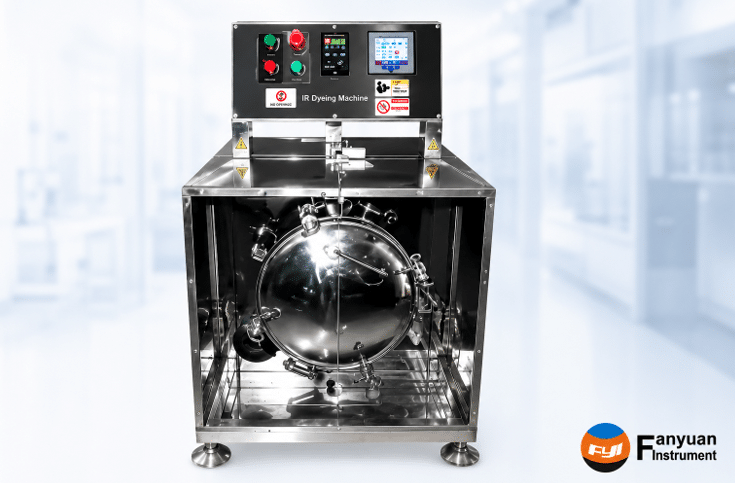
The beakers are continuously rotated so that the fabric is constantly in contact with the dye solution, which helps to enhance the dye distribution. In tests with cotton-polyester blends, it helps to even the dye absorption between the two fibres.
Better Dye Fixation
The stable heating conditions are beneficial in that dye molecules will bond effectively to the textile fibres, thereby reducing unfixed dye and ensuring wash fastness. For instance, nylon dyed with acid dyes is found to be more colour fast after laundering under controlled infrared heating.
Energy Efficiency Comparison: IR Dyeing vs Steam Dyeing
Yes. Usually an IR dyeing machine is more energy efficient, as infrared heat is applied directly to the dyeing beakers, rather than steam is generated to heat the whole system. This will minimise heat loss, shorten the heating time and decrease the amount of energy used, and is perfect for lab dyeing or sample development.
IR Dyeing Machine
In the infrared dyeing machine, the dye liquor is heated directly by the infrared radiation, so that the speed of dye liquor heating is fast, the heat effect is uniform, and the loss of energy is small. As there is no boiler or steam distribution system required, laboratories enjoy lower operating costs, shorter dyeing cycles and accurate temperature control. This means that IR dyeing is particularly recommended for color matching, sample development and research use.
Steam Dyeing Machine
The steam dyeing machine is based on the principle of using steam from a steam generator to transfer heat to the dye bath. Although it is used extensively for large-scale textile production, steam systems are more energy-consuming since heat is lost through steam chambers, pipelines and boilers. They also need longer heating durations and higher maintenance, adding to maintenance costs.
IR Dyeing vs Steam Dyeing Comparison Table
Temperature Control Systems in IR Dyeing Machines
Temperature control is very important as it will give uniform dye absorption, uniform colour development and repeatable laboratory results. The IR dyeing machine is featured with an automatic control system to ensure uniform heating of the dyeing machine during the dyeing process, which minimises the difference of shades and defects during the dyeing process.
Programmable Temperature Profiles
The modern infrared dyeing machines enable the setting of heating rate, target temperature, holding time and cooling cycles. For instance, polyester dyeing could be done with a controlled temperature profile to ensure uniform dye penetration.
PLC Temperature Control System
The IR dyeing machine is controlled by the PID and is equipped with a PLC temperature control system, which can be used to control the temperature precisely and steadily during the dyeing process. FYI’s RHS series is equipped with the latest IR heating technology to minimize beaker heating differences compared to traditional IR systems, and the rotating rack assures even beaker heating. When combined with programmable temperature control and air cooling, this system provides repeatable dyeing results, better colour repeatability and dependable results in laboratory testing.
Real-Time Temperature Monitoring
The temperature of the dye bath is continuously monitored by built-in sensors, and the heating is automatically adjusted. This helps to avoid overheating during the dyeing process of wool, thereby reducing the risk of damage to the fibres and inconsistencies in the dyeing process.
Automatic Heating and Cooling
It is a self-regulation machine that automatically regulates heating and cooling processes to guarantee process stability. For example, slow cooling after the dyeing process (reactive dyeing) enables better dyeing and reduces the likelihood of uneven dyeing.
Common Dyeing Defects in IR Dyeing Machines and Solutions
The most frequent defects are uneven dyeing, variation in shade, inadequate dye fixation and staining of the fabric. In most cases, problems are the result of incorrect temperature control or inappropriate dyeing conditions or a lack of appropriate machine maintenance and can be avoided by good process control.
Uneven Dyeing
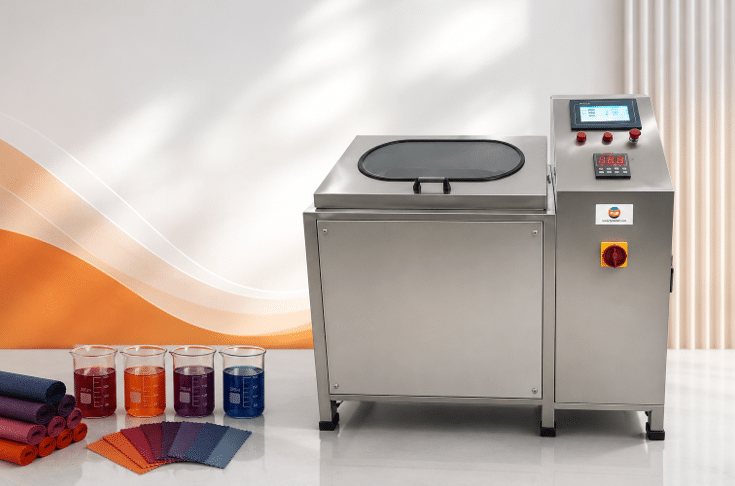
Uneven dyeing is the result of dye absorbing into different sections of the fabric to varying degrees, giving uneven color. Usually results from wrong liquor ratios, wrong temperature settings, or poor dyestuff circulation in the IR dyeing machine.
Solution
Adhere to the recommended temperature program, liquor ratio and rotate beakers equally. In addition, the infrared dyeing machine is also regularly calibrated to achieve even dye penetration.
Shade Variation
Variations in shade are colour differences between dyeings or batches of dyeings. This typically happens due to improper dyeing, incorrect dye measurements or dyeing process variations.
Solution
Be careful to use the same dye formulations, keep the same dyeing parameters and test the accuracy of the temperature before each dyeing in the laboratory.
Poor Dye Fixation
Poor dye fixation is when the dye molecules do not bind completely with the fibres of the textile, so that the fastness to wash and durability of colour is lessened. It is often due to wrong dyeing temperature or a lack of dyeing time.
Solution
Use the recommended dyeing temperature and holding time for the respective classes of fibres and dyes. The dye fixation and colour fastness are enhanced by using an IR lab dyeing machine with accurate temperature control.
Fabric Staining or Spots
Fabric staining is a problem that presents itself as unwanted marks that remain on the fabric due to the presence of dyes, contaminated beakers or chemical residues. This defect may cause loss of color and/or test accuracy.
Solution
Thoroughly clean the beakers after each dyeing cycle, make up new dye solutions and check the machine regularly for contamination and to make sure that it can be tested accurately in the lab.
Conclusion
The IR dyeing machine plays a critical role in the laboratory to ensure accurate color matching, uniform dye penetration, accurate temperature control and process validation prior to large-scale productions. Being efficient, automated and repeatable, it is a crucial attribute in modern textile testing and dyeing.
With the introduction of smarter and more sustainable technologies in the textile sector, infrared dyeing machines will become an increasingly vital part of the textile industry in terms of productivity, energy saving, and increased quality of dyeing.
Looking for a Reliable Infrared Sample Dyeing Machine?
Available in advanced models, FYI Tester offers the full spectrum of solutions for sample dyeing machines, including Infrared Sample Dyeing Machines suitable for color matching, laboratory testing or process development and aiming for accuracy and durability. We have the knowledge and expertise to help you to select the right model for your fabric types, testing capacity and production needs. To choose the best IR dyeing solution in your textile testing laboratory, contact FYI Tester today.


