Comparison of Standards for Carbon Black Content Determination Methods
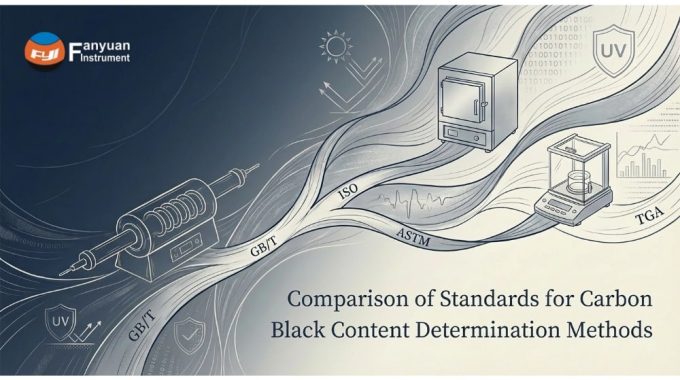
Carbon black is one of the most commonly used additives for UV resistance and weathering stabilization in polyolefin materials. Its content not only directly affects the performance of pipes and fittings, but also determines the comparability of test data and the consistency of compliance when product standards reference specific test methods. With GB/T 13021 being upgraded from the earlier single-method framework to the 2023 edition and becoming identical to ISO 6964:2019, China’s testing and quality-control system has entered a new stage in terms of method selection, key parameter settings, and mutual recognition of results with international standards. To facilitate an accurate understanding of the differences among standards, this paper takes GB/T 13021-2023 as the main line, compares the key differences among ISO 6964:2019, ASTM D 1603-20, and ASTM D 4218-20, and discusses how these differences affect test execution and data interpretation.

Comparison of the current status of domestic and international standards and their method coverage
Comparison of applicable scope and target materials
Carbon black content is a critical quality-control indicator for the weathering resistance, UV aging resistance, and long-term service stability of polyolefin materials. Therefore, different standard systems have established their own test methods around the same core objective: how to separate the polymer matrix, retain carbon black, and quantify it under controlled atmospheres and temperature programs.
ISO 6964:2019 focuses on polyolefin pipes and fittings, and its standard design is naturally oriented toward material evaluation and product-standard referencing in the piping industry.
ASTM D 1603-20 is positioned as a more general material test method for determining carbon black content in olefin plastics. Its broader coverage also means that its test conditions emphasize general applicability rather than alignment with a specific product system.
ASTM D 4218-20 is centered on the muffle-furnace technique and applies to the determination of carbon black content in polyethylene compounds. Its logic is to treat “muffle-furnace determination” as an independent specialized method system, enabling rapid implementation in laboratories that already have muffle-furnace equipment.
By comparison, GB/T 13021-2023 explicitly targets polyolefin pipes and fittings. Its scope is highly consistent with ISO 6964:2019, and it enhances adaptability to different laboratory equipment conditions through a multi-method framework. This allows it to serve as a practical, comparable, and referenceable unified testing framework within China’s pipe-and-fitting testing system.
Comparison of method coverage
In terms of method coverage, ISO 6964:2019 includes the tube-furnace method, the muffle-furnace method, and thermogravimetric analysis (TGA), forming a relatively complete “pyrolysis + calcination” testing system. In contrast, the ASTM system shows a more separated structure: ASTM D 1603-20 mainly corresponds to the tube-furnace method, while ASTM D 4218-20 mainly corresponds to the muffle-furnace method, with each method managed under a different standard document. GB/T 13021-2023 adopts a three-method framework consisting of Method A (tube-furnace calcination), Method B (high-temperature tube furnace or microwave muffle furnace), and Method C (thermogravimetric analysis, TGA). This framework is broadly aligned with ISO 6964:2019. By organizing multiple technical routes under a single national standard, GB/T 13021-2023 enables testing implementation under different equipment conditions within one standard number, and it also provides a clearer institutional basis for cross-method data comparison.
Standard iteration and evolution of technical routes
From the perspective of technical evolution, the older version of the national standard was dominated by a single method, which is insufficient to meet current needs in testing organizations and enterprises for equipment diversity, improved efficiency, data comparability, and arbitration consistency. The key changes in GB/T 13021-2023 are twofold: it standardizes the pyrolysis and calcination processes through more modern atmosphere control and program control logic, and it introduces mature methods such as the muffle-furnace method and TGA, so that the standard is no longer limited to a single device and a single procedure. More importantly, GB/T 13021-2023 is identical to ISO 6964:2019 (IDT). This means its core methodology is consistent with international standards in both principles and procedural framework, providing stronger support for domestic and international data mutual recognition, export compliance communication, and the international interpretability of third-party test reports. It also enables comparative studies to focus more on detailed clause differences and engineering executability differences under a shared framework, rather than remaining at a purely conceptual level of method principles.
| Standard | Tube-furnace method | Muffle-furnace method | Microwave muffle-furnace method | Thermogravimetric analysis (TGA) | Overview of applicable materials |
| GB/T 13021-2023 | Yes (Method A) | Yes (Method B) | Yes (Method B2) | Yes (Method C) | Polyolefin pipes and fittings |
| ISO 6964:2019 | Yes | Yes | Yes | Yes | Polyolefin pipes and fittings |
| ASTM D 1603-20 | Yes | No | No | No | Olefin plastics |
| ASTM D 4218-20 | No | Yes | No | No | Polyethylene compounds |
Comparison of the overall framework for carbon black content determination (method classification perspective)
Positioning and consistency of the tube-furnace method across standards
The core concept of the tube-furnace method is to pyrolyze the polymer under an inert atmosphere (typically nitrogen) so that the matrix decomposes while preventing carbon black from being oxidized during the pyrolysis stage. The residue is then calcined at high temperature under an oxidizing atmosphere so that the carbon black is completely oxidized and removed. The carbon black content is finally calculated based on the mass difference of residues at different stages. Method A in GB/T 13021-2023 and the tube-furnace method in ISO 6964:2019 belong to the same methodological system, and ASTM D 1603-20 follows the same overall principle. Therefore, these three standards are highly consistent in their methodological backbone. The main differences lie in executable requirements such as nitrogen purification and deoxygenation, sample insertion and structural design, pyrolysis temperature–time windows, and gas flow settings. These differences largely determine the stability, repeatability, and comparability of the method across different laboratories.

Differentiated implementation of the muffle-furnace method in ISO and ASTM
The muffle-furnace method is also based on calculating carbon black content from the mass difference between the pyrolysis and calcination stages. However, its key risk is a stronger dependence on an oxygen-deficient environment during pyrolysis. In particular, air ingress during pyrolysis and the furnace chamber size can significantly affect oxygen consumption and thus the stability of the oxygen-deficient condition. ISO 6964:2019 incorporates the muffle-furnace method into its standard system and further divides it into two routes: the conventional muffle furnace and the microwave muffle furnace. It controls the pyrolysis process through programmed heating and holding steps, and then applies a higher temperature during the subsequent calcination stage to ensure complete oxidation of carbon black. In contrast, ASTM D 4218-20 adopts a short-time pyrolysis strategy at 600–610°C followed by calcination within the same temperature range, placing greater emphasis on speed and operational practicality. It quantifies carbon black mass loss through a defined weighing rhythm. Method B in GB/T 13021-2023 includes both a high-temperature tube-furnace route and a microwave muffle-furnace route. Its organizational structure is closer to ISO’s multi-route system, but attention must still be paid to the sources of differences from ASTM D 4218-20 in specific parameters and weighing rules, in order to avoid result bias caused by improper method selection or execution.
Alignment of the thermogravimetric analysis method with ISO TGA provisions
The TGA method replaces repeated removal and weighing with a continuous mass-change curve. It measures stage-wise mass losses during pyrolysis and calcination through programmed heating and controlled atmosphere switching. ISO 6964:2019 introduces TGA as a newly added method and specifies key conditions such as sample mass range, heating rate, temperature plateaus, and atmosphere switching parameters. Method C in GB/T 13021-2023 is aligned with the ISO framework and offers advantages in automation, energy efficiency, and reduced smoke generation. However, because the sample mass is typically at the milligram level, sample representativeness and control of inter-sample variability become critical issues for practical engineering implementation.

Overall differences among the three methods in operability, data comparability, and equipment threshold
In terms of operability, the muffle-furnace method is widely available and has a relatively low implementation threshold, but it is more sensitive to the stability of the oxygen-deficient environment during pyrolysis. The tube-furnace method provides better controllability of the atmosphere and is generally easier to ensure repeatability, but it requires higher standards for equipment configuration and sample insertion design. The TGA method offers the highest level of automation, intuitive process visibility, and lower contamination, but it depends more heavily on instrument consistency, sampling representativeness, and standardized result interpretation rules. From the perspective of data comparability, GB/T 13021-2023 and ISO 6964:2019 share consistent method systems and key temperature windows, making it easier to establish a unified interpretation framework for cross-method and inter-laboratory comparisons. In contrast, the ASTM system manages different methods through separate standards, and certain parameters (such as the temperature range used in the muffle-furnace method) differ from the ISO framework. As a result, additional clarification of the referenced method and test conditions is often required when exchanging or comparing data across standards.
Comparison of the tube-furnace method (GB/T 13021-2023 Method A vs ISO 6964:2019 vs ASTM D 1603-20)
Atmosphere control and deoxygenation strategy
The primary control variable in the tube-furnace method is the oxygen content in the inert atmosphere. ISO 6964:2019 emphasizes that the oxygen content in nitrogen should be less than 0.002%, and it provides multiple deoxygenation options, such as pyrogallol solution, heated copper wire/metal wire, or purification devices. This reflects a clause-design approach that is “threshold-oriented in terms of performance, with flexible implementation routes.” ASTM D 1603-20 is relatively less stringent on oxygen control, allowing an oxygen content below 0.01%. It also notes that deoxygenation may be omitted when nitrogen with an oxygen content below 0.002% is used, which accommodates both practical gas supply conditions and simplified operation. Since GB/T 13021-2023 is identical to ISO 6964:2019, its atmosphere-control logic is consistent with ISO. The emphasis is not on mandating a specific deoxygenation device, but on ensuring that the inert gas entering the furnace meets the oxygen threshold, thereby reducing the risk of systematic bias caused by premature oxidation of carbon black during pyrolysis.
Comparison of sample boat cleaning and constant-mass requirements
Cleaning and weighing the sample boat are important measures to reduce mass errors associated with the empty boat. ISO 6964:2019 requires the sample boat to be calcined at high temperature for a specified time and then cooled and weighed in a desiccator, in order to minimize the effects of impurities and moisture uptake on the results. ASTM D 1603-20 similarly emphasizes that the sample boat should be heated to red heat and then cooled and weighed. Although its temperature description is more operational than strictly temperature-controlled, the underlying objective is the same. GB/T 13021-2023 is aligned with the ISO framework, and therefore implementation should highlight the quality-control actions of “cleaning, drying, and achieving constant mass” for the empty boat. This is particularly critical for low carbon black content samples, because weighing errors account for a larger proportion of the measured carbon black mass and can easily amplify into significant result deviations.
Sample insertion and structural design to minimize oxygen ingress
Oxygen ingress during the sample insertion stage is a typical source of error in the tube-furnace method. Both ISO 6964:2019 and ASTM D 1603-20 introduce a combustion-tube structure: nitrogen is first purged for a certain period, and then the sample boat is pushed into the center of the furnace, so that the sample enters under an oxygen-free or low-oxygen environment as much as possible. ASTM D 1603-20 further provides multiple design options for deoxygenation structures, such as packing copper wire inside the combustion tube to further reduce oxygen ingress. GB/T 13021-2023 follows the ISO approach for sample insertion. Therefore, in comparative analysis, it can be clearly stated that the insertion structure design of GB/T 13021-2023 is closer to the mainstream international approach. Its significance is not only improved operational convenience, but also reduced uncertainty in oxygen ingress caused by operator-dependent differences, thereby enhancing inter-laboratory data consistency.
Comparison of pyrolysis-stage parameters
Key parameters in the pyrolysis stage include temperature, time, nitrogen flow rate, and post-pyrolysis cooling strategy. ISO 6964:2019 and GB/T 13021-2023 adopt a pyrolysis temperature of approximately 550°C. After pyrolysis, the sample boat is moved to a low-temperature zone and nitrogen is continued for a certain period before the boat is cooled in a desiccator and weighed. The core purpose of this strategy is to avoid unexpected changes in carbon black under a high-temperature inert atmosphere, while also preventing oxidation caused by direct exposure of the sample to air. ASTM D 1603-20 allows a wider pyrolysis temperature window, and its clauses place greater emphasis on the idea that temperature is not the only critical factor. It also differs from the ISO framework in terms of pyrolysis time and gas flow settings, which makes it more likely that different laboratories executing the ASTM method will adopt “equivalent but not fully identical” combinations of pyrolysis conditions. Comparative studies should emphasize that the harmonization of pyrolysis parameters between GB/T 13021-2023 and ISO 6964:2019 helps constrain uncertainty in the pyrolysis stage to a narrower range, thereby improving the comparability of results.
Comparison of calcination-stage parameters
The key endpoint in the calcination stage is the complete disappearance of carbon black. ISO 6964:2019 and GB/T 13021-2023 typically use a calcination temperature of approximately 900°C until the carbon black is completely removed, following a “high-temperature, rapid oxidation” approach. ASTM D 1603-20 allows carbon black removal at 600°C and likewise uses complete disappearance of carbon black as the endpoint criterion. This indicates that carbon black can be oxidized at different temperatures under an oxidizing atmosphere, but reaction rates and potential impacts on ash formation may differ. Comparative analysis can point out that the use of higher temperatures in ISO and GB/T is intended to shorten calcination time and improve the repeatability of endpoint determination, whereas ASTM’s lower temperature approach may place greater emphasis on equipment universality and operational safety/accessibility. However, when comparing data between ASTM and ISO/GB/T, the temperature condition must be clearly stated to avoid misattributing differences in results.
Number of weighings, repeatability control, and result reporting
The tube-furnace method typically involves multiple weighings, including the residue mass after pyrolysis and the ash residue mass after calcination. ISO 6964:2019 emphasizes weighing after cooling to room temperature in a desiccator, and it reports the final result as the average of multiple specimens. Since GB/T 13021-2023 is identical to the ISO framework, the reporting format and significant-figure rules should remain consistent, providing a unified basis for domestic test reporting and international data communication.
ASTM D 1603-20 describes cooling time and weighing details in a more operational manner, and its repeatability control relies more on each laboratory’s internal quality system. Comparative studies should note that the more weighings involved, the greater the risk of cumulative single-weighing errors. Therefore, GB/T and ISO reduce error propagation by standardizing cooling and weighing procedures, while one advantage of the TGA method is that it reduces manual weighing steps.
Key parameter comparison table (tube-furnace method)
| Item | GB/T 13021-2023 | ISO 6964:2019 | ASTM D 1603-20 |
| Inert gas requirement | Nitrogen, low-oxygen environment emphasized | Nitrogen, oxygen content < 0.002% | Nitrogen, oxygen content < 0.01%; note allows omission of deoxygenation when < 0.002% |
| Deoxygenation / purification | Threshold-based; purification devices may be used | Multiple routes: pyrogallol solution, heated copper/metal wire, or purification devices | Multiple designs: solutions, copper wire, packing in combustion tube, etc. |
| Sample insertion | Combustion-tube structure to reduce oxygen ingress (consistent with ISO) | Combustion-tube insertion to minimize oxygen ingress | Combustion-tube insertion after nitrogen purging |
| Pyrolysis temperature & time | ~550°C with holding time (consistent with ISO) | 550°C for 45 min | ≥15 min at 600°C; allows 500–700°C window |
| Post-pyrolysis cooling | Nitrogen cooling in low-temp zone, then desiccator weighing | Nitrogen cooling in low-temp zone for 10 min, then weighing | Nitrogen cooling in low-temp zone for 5 min, then weighing |
| Calcination temperature | ~900°C in air until carbon black disappears | 900°C until carbon black disappears | 600°C for 10 min until carbon black disappears |
| Endpoint criterion | Complete disappearance of carbon black | Complete disappearance of carbon black | Complete disappearance of carbon black |
| Boat cleaning / constant mass | Cleaning, drying, and weighing control required | Calcined at 900°C for 1 h, then cooled and weighed | Heated to red heat, then cooled and weighed |
| Weighing steps | Multiple weighings (after pyrolysis and after calcination) | Multiple weighings | Multiple weighings; cooling time specified more explicitly |
Comparison of the muffle-furnace method (GB/T 13021-2023 Method B1/B2 vs ISO 6964:2019 vs ASTM D 4218-20)
Differences in principles and risk-control logic
The key to the muffle-furnace method is that an oxygen-deficient environment must be established during the pyrolysis stage to prevent carbon black from burning. Otherwise, the residue mass after pyrolysis will be underestimated, leading to a lower calculated carbon black content. ISO 6964:2019 and GB/T 13021-2023 control temperature changes and holding times during pyrolysis through a programmed procedure, aiming to achieve a stable oxygen-deficient condition under a repeatable temperature program. ASTM D 4218-20 adopts a short-time pyrolysis strategy at 600–610°C, followed by calcination within the same temperature range, and quantifies carbon black mass loss through two removal-and-weighing steps. Its logic places greater emphasis on “rapidly creating an inert environment and completing the determination quickly,” but it is also more sensitive to oxygen ingress caused by opening and closing the furnace door. Comparative analysis should make it clear that, for the muffle-furnace method, major sources of error are more closely related to dynamic atmosphere changes inside the furnace than to the temperature reading itself. Therefore, the standard requirements and restrictions on furnace-door opening, sealing performance, crucible integrity, and ventilation conditions are decisive for result reliability.
Comparison of pre-test preparation
ASTM D 4218-20 uses disposable aluminum sample pans with a sample mass of approximately 1 g. It requires the pan to have rolled or raised edges to prevent carbon black from being blown or scattered, and it calls for a short pre-burn at 600–610°C to remove surface contaminants. ISO 6964:2019 uses lidded quartz crucibles, with a sample mass up to 1–10 g. It requires the crucibles to be thoroughly calcined at high temperature, dried, and repeatedly weighed until constant mass is achieved, reflecting stricter cleanliness and constant-mass control for reusable vessels. Since GB/T 13021-2023 is aligned with ISO, its vessel selection and constant-mass requirements for the muffle-furnace method are closer to the quartz-crucible system. This approach reduces batch-to-batch variation introduced by disposable containers and mitigates the influence of edge-scattering risks on results, while also making it easier to perform cross-method comparisons within a consistent vessel system.
Comparison of the pyrolysis process
ISO 6964:2019 divides conventional muffle-furnace pyrolysis into three stages: heating, holding, and cooling. A typical pyrolysis temperature is (550 ± 25)°C held for a specified time, followed by cooling back to the initial pyrolysis temperature, forming a relatively complete program-control chain. In contrast, the microwave muffle-furnace method simplifies pyrolysis by holding at (520 ± 25)°C for a specified time, eliminating the conventional heating and cooling stages to improve efficiency. ASTM D 4218-20 uses pyrolysis at 600–610°C for 3 minutes, representing a high-temperature, short-duration pyrolysis route. Its pyrolysis temperature differs from the ISO framework, and the pyrolysis time is significantly shorter. If Method B in GB/T 13021-2023 adopts the same pyrolysis temperature window as ISO, its comparative advantage lies in maintaining consistency with the tube-furnace method’s pyrolysis temperature system, thereby enhancing data comparability across methods. The ASTM route, however, emphasizes rapid testing, but when comparing results across standards it is more likely to show systematic shifts caused by differences in pyrolysis temperature.
Comparison of the calcination process
In ISO 6964:2019, the calcination stage typically uses approximately 900°C for a specified duration. The crucible is then removed only after the furnace temperature has dropped below a defined threshold, followed by desiccator cooling and weighing. ASTM D 4218-20, by contrast, calcines at 600–610°C for at least 10 minutes until the ash turns gray, and then weighs after a short desiccator cooling period. The fundamental difference lies in the calcination temperature range and the weighing rhythm. The ISO route accelerates carbon black oxidation through high-temperature calcination and uses a more stable ash residue as the endpoint basis. The ASTM route completes both pyrolysis and calcination rhythm switching within the same temperature range, relying more heavily on the operator’s endpoint judgment and operational consistency. Alignment of GB/T 13021-2023 with ISO means that its muffle-furnace calcination procedure tends toward a “high-temperature, clearly defined endpoint” approach, which is more conducive to establishing a unified judgment scale across testing organizations.
Operational safety and testing environment requirements
ASTM D 4218-20 explicitly requires testing to be performed in a fume hood to promptly remove smoke. It also emphasizes avoiding opening the muffle-furnace door during testing to prevent flames caused by combustible gases escaping from the door seal, reflecting direct safety constraints under high-temperature, short-time operations. ISO 6964:2019 also involves smoke and high-temperature risks, but its programmed heating and longer cooling-and-weighing rhythm reduce the exposure to frequent furnace-door opening to some extent. In engineering implementation, GB/T 13021-2023 should incorporate the practical implications of such safety requirements. Even if the standard text does not present them as a dedicated “safety section,” laboratories should institutionalize measures such as ventilation, proper tools for handling crucibles, and furnace-door opening control in their operating procedures to ensure that Method B can be applied safely and consistently in both enterprises and third-party laboratories.
Discussion on data comparability
ISO 6964:2019 applies a pyrolysis temperature window in the muffle-furnace method that is consistent with other methods. The key value of this design is to make the pyrolysis stage as “homogeneous” as possible across different methods, so that differences are more likely to be attributed to equipment structure and atmosphere dynamics, which are easier to interpret and compare.
Since GB/T 13021-2023 is identical to the ISO framework, a “multi-method cross-check within the same standard” quality-control strategy can be established in domestic implementation. For example, Method A and Method B can be used for cross-validation on the same batch of samples to assess the atmosphere stability and operational consistency of the muffle-furnace method. By contrast, the 600–610°C strategy used in ASTM D 4218-20 requires additional clarification of temperature-program differences when comparing its data with the ISO/GB/T framework. Otherwise, method-related differences may be mistakenly interpreted as material-related differences.
Key parameter comparison table (muffle-furnace method)
| Item | GB/T 13021-2023 (Method B1/B2) | ISO 6964:2019 (conventional/microwave) | ASTM D 4218-20 |
| Core risk in principle | Oxygen-deficient pyrolysis required to prevent carbon black burning | Same; emphasizes intact crucible lid/edges to prevent air ingress | Same; also emphasizes fume hood use and avoiding furnace-door opening |
| Sample container | Mainly quartz crucible system (consistent with ISO) | Lidded quartz crucible, reusable | Disposable aluminum pan; edges must be rolled/raised to prevent scattering |
| Sample mass | Gram-level (consistent with ISO) | 1–10 g | ~1 g |
| Pre-test cleaning | High-temperature calcination + drying to constant mass | ~900°C calcination for ~1 h; desiccator drying and weighing to constant mass (two weighings differ by ≤ 0.5 mg) | 600–610°C pre-burn for 2 min to remove impurities |
| Pyrolysis program | Two routes: conventional / microwave | Conventional: 325→550°C heating, 550°C hold, then cool back to 325°C; Microwave: 520°C hold | 600–610°C pyrolysis for 3 min |
| Calcination program | ~900°C calcination with controlled cooling and weighing | ~900°C calcination for ~30 min; remove and weigh after cooling below 500°C | 600–610°C calcination ≥10 min until ash turns gray |
| Weighing rhythm | Emphasizes desiccator cooling before weighing | Weigh after cooling for at least 30 min | Weigh after cooling for at least 2 min |
| Data comparability | Consistent pyrolysis temperature system with tube-furnace method, facilitating cross-comparison | 550°C pyrolysis consistent with other methods, facilitating cross-method comparison | Different temperature system; cross-comparison with ISO/GB requires clarification |
Comparison of the thermogravimetric analysis method (GB/T 13021-2023 Method C vs ISO 6964:2019 TGA)
Sample mass and sampling requirements
The typical sample mass for the TGA method is in the range of 15–40 mg, which is much smaller than the gram-level samples used in the tube-furnace or muffle-furnace methods. This makes TGA more sensitive to sampling representativeness. ISO 6964:2019 uses the average of multiple specimens as the basis for reporting results, but the descriptions of sampling locations and sampling strategy still need to be further refined according to the actual product form. When implementing GB/T 13021-2023 in the domestic context of pipes and fittings, attention should be paid to potential differences in carbon black distribution across different pipe sections, axial positions, or layer thickness locations. Otherwise, even with good instrument repeatability, non-uniformity of the material itself may lead to scattered results due to the mg-level sampling scale.
Temperature program and gas-switching points
In ISO 6964:2019, the TGA method typically heats the specimen under a nitrogen atmosphere at a constant heating rate up to 800°C and holds for a period to complete pyrolysis. The atmosphere is then switched to air or oxygen, and heating continues to 900°C to complete carbon black oxidation. Carbon black content is ultimately calculated based on the mass loss. GB/T 13021-2023 is identical to this procedural framework, and therefore its temperature program is consistent with ISO. Key control points include the selection of heating rate, the holding time at the 800°C plateau, the timing of atmosphere switching, and the stability of gas purity. Compared with the tube-furnace method, TGA integrates pyrolysis and calcination into a continuous process, reducing manual removal-and-weighing steps. However, this also means that any delay in gas switching or fluctuations in gas flow will be directly reflected in curve inflection points, affecting the definition of the mass-loss interval attributed to carbon black oxidation.
Curve interpretation and definition of mass-change nodes
One major advantage of TGA is process visualization: the mass decrease during pyrolysis, the mass decrease during carbon black oxidation, and the final ash plateau can all be clearly observed on the curve, making result interpretation more intuitive. By specifying procedural conditions, the ISO framework provides a basis for curve-shape comparability across laboratories. When implementing GB/T 13021-2023 domestically, curve-node definitions and mass-calculation rules should be incorporated into laboratory operating procedures, especially regarding how to distinguish pyrolysis residue from carbon black oxidation mass loss. This helps avoid subjective differences in curve segmentation among analysts, which could otherwise offset the benefits of TGA automation.
Repeatability and outlier-handling rules
ISO 6964:2019 specifies that the arithmetic mean of three specimen results should be reported as the final result, rounded to two significant figures, and it provides a basic approach for controlling result dispersion. Because TGA uses small sample masses and may show greater variability, engineering applications should establish explicit outlier-handling rules. For example, when the difference between the maximum and minimum values exceeds a defined threshold, additional tests or re-sampling should be required. Building on alignment with ISO, GB/T 13021-2023 can further institutionalize sampling locations, sampling quantity, and re-test criteria through internal laboratory quality systems, ensuring result stability and traceability.
Key parameter comparison table (TGA method)
| Item | GB/T 13021-2023 (Method C) | ISO 6964:2019 (TGA) |
| Sample mass | mg level | 15–40 mg |
| Atmosphere & procedure | Pyrolysis under nitrogen, then switch to air/oxygen for calcination | Heat under nitrogen to 800°C and hold for 15 min, then heat to 900°C and switch to air/oxygen |
| Heating rate | 10 or 20°C/min | 10 or 20°C/min |
| Result reporting | Average of multiple specimens; two significant figures | Arithmetic mean of three specimens; rounded to two significant figures |
| Advantages | Automated, minimal smoke, intuitive process | Same |
| Limitations | More sensitive to sample representativeness; variability may be higher | Recommends increasing test repetitions and clarifying sampling to reduce bias |
Comparison of calculation formulas and result reporting requirements
Calculation model
Whether using the tube-furnace method, the muffle-furnace method, or the TGA method, the core calculation model can be summarized as “the residue mass after pyrolysis minus the ash residue mass after calcination, divided by the initial specimen mass.” In essence, this approach isolates the mass of carbon black from the total residue through a mass difference. Since ISO 6964:2019 and GB/T 13021-2023 share the same methodological origin, it is easier to maintain consistency in how the calculation model is expressed and how symbols are defined. The ASTM standards follow the same calculation logic, but because their weighing rhythm and temperature programs differ, the physical meaning of the mass points may vary slightly. Therefore, in cross-standard comparisons, it is necessary to clearly specify which standard’s mass-point definitions are being used, so as to avoid mixing residue masses from different stages.
Number of significant figures and rounding rules
ISO 6964:2019 requires test results to be reported with two significant figures and expressed as an average value. This rule emphasizes uniformity and comparability in reporting. GB/T 13021-2023 is identical to the ISO framework, so domestic report formats should follow the same significant-figure and averaging rules, in order to avoid apparent differences caused purely by reporting conventions. ASTM standards place greater emphasis on operational executability in reporting, and specific significant-figure and statistical rules may depend on laboratory practice. Therefore, comparative studies should point out that the unified reporting rules in GB/T and ISO are more conducive to establishing a shared industry-wide framework for data interpretation, whereas ASTM results often require harmonization of reporting formats before being incorporated into comparative datasets.
Minimum information set for test reports
In comparative studies, the key value of a test report is not only the carbon black content result itself, but also the method route, critical parameters, and quality-control information. Because the ISO and GB/T frameworks include multiple methods, reports should clearly state the selected method designation, pyrolysis and calcination conditions, gas type and purity, specimen mass and sampling strategy, number of replicate tests, and any abnormal observations, in order to ensure traceability. In the ASTM system, different methods are managed under separate standards, so the report naturally includes the relevant standard number. However, for cross-method comparisons, key parameter conditions still need to be supplemented. If GB/T 13021-2023 can standardize this information set into a unified reporting template during domestic implementation, it will significantly improve the comparability and review efficiency of third-party test reports.
Standard alignment and engineering application recommendations (concluding section of the comparative study)
Consistency and differences between GB/T 13021-2023 and ISO 6964:2019
Since GB/T 13021-2023 is identical to ISO 6964:2019, the two standards show a high degree of consistency in method coverage, the fundamental procedures for pyrolysis and calcination, the framework of the TGA method, and result reporting rules. This alignment allows GB/T 13021-2023, when implemented domestically, to directly inherit the comparability advantages of the ISO system, particularly in multi-method cross-checking, inter-laboratory proficiency testing, and international data communication. If any differences arise, they are more likely to come from variations in laboratory equipment models, operating habits, and the level of detail in laboratory work instructions, rather than from the standard methodology itself. Therefore, the engineering focus should be placed on consistent clause execution and training on critical control points.
Differences between GB/T 13021-2023 and ASTM D 1603-20
GB/T 13021-2023 and ASTM D 1603-20 share the same principle for the tube-furnace method, but ASTM places greater emphasis on general applicability and flexibility in terms of the pyrolysis temperature window, gas flow descriptions, and deoxygenation requirements. Its clauses allow laboratories to select implementation approaches within a defined range. Because GB/T 13021-2023 is aligned with ISO, its pyrolysis temperature and program control tend to be more standardized, which is advantageous when establishing an industry-wide data baseline. For scenarios requiring cross-standard comparisons, it is preferable to harmonize key parameters or perform inter-method verification, in order to avoid misinterpreting systematic deviations caused by temperature-program differences as material-related differences.
Differences between GB/T 13021-2023 and ASTM D 4218-20
The muffle-furnace method is where differences are most pronounced. ASTM D 4218-20 adopts short-time pyrolysis at 600–610°C followed by calcination within the same temperature range, with frequent removal and weighing steps. Its strengths include speed, a lower equipment threshold, and a clear operational workflow. However, it is more sensitive to oxygen ingress caused by opening and closing the furnace door, and it imposes stricter safety and ventilation requirements. GB/T 13021-2023, being consistent with the ISO framework, places greater emphasis on segmented program control, typically around 550°C for pyrolysis and around 900°C for calcination, and it improves comparability through constant-mass control of vessels and a more standardized weighing rhythm. Neither approach is inherently superior in all cases, but when comparing results across standards, differences in temperature programs and weighing points must be clearly stated. Otherwise, the sources of variation in carbon black content results may be misinterpreted.
Data comparability under a multi-method system and arbitration method selection logic
In a system where multiple methods coexist, the key to data comparability is to establish a unified quality-control strategy and a clear arbitration logic. Because GB/T 13021-2023 includes Methods A/B/C, cross-validation can be carried out within the same standard framework. Even when enterprises and third-party laboratories have different equipment conditions, inter-method comparisons can be used to establish conversion relationships or consistency judgments. In case of disputes, a method with more controllable atmosphere conditions and fewer operational variables can be prioritized as the arbitration route. For example, the tube-furnace method can be used as the primary arbitration method, while TGA can serve as a rapid verification tool or as a supplement for process visualization. When incorporating ASTM-based results into domestic comparative databases, the standard number and key parameters should be clearly documented in the report, and parallel testing on the same batch of samples should be conducted when necessary. This ensures that data obtained from different standard methods can be mapped to each other at the interpretation level, rather than being compared as raw numerical values alone.