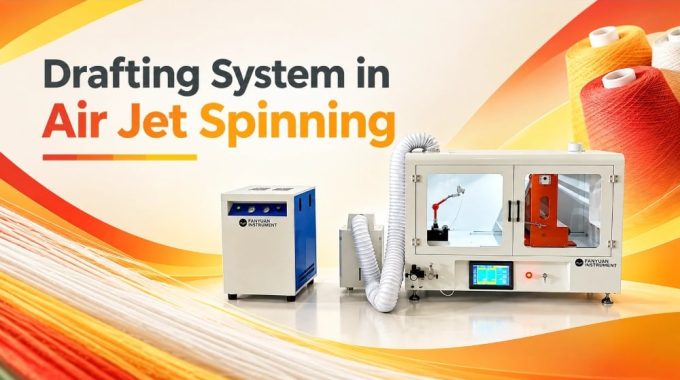
Drafting System in Air Jet Spinning
Air jet spinning determines yarn quality and evenness through a roller-and-apron drafting system. The system aligns the fibres together in parallel while the air jet wraps the surface fibres around the untwisted core. An air jet cannot fix mechanical drafting errors and requires mill technicians to precisely set draft ratios, roller speeds, and fiber-specific settings to minimize faults.
What Is the Drafting System in Air Jet Spinning?
The drafting system is the roller unit that thins the draw frame sliver and draws it into a thin strand, depending on your yarn count requirements. Typical machines used in the textile industry have a four-roller and double-apron unit to control fiber uniformity.
Key Components
- Back and forth rollers: feed the sliver and set the break draft zone.
- Middle roller with aprons: aprons guide short and medium fibers through the main draft zone.
- Front roller: a steel bottom roller with a top roller that sets the delivery speed and passes the strand to the nozzle.
- Top roller cots: rubber covers whose hardness, surface condition, and loading affect grip.
- Weighting arms: apply pressure to hold the fibers between the roller nips.
What Drafting Does in Yarn Production
Drafting thins the raw draw frame sliver by several hundred while also straightening and aligning the individual fibres in parallel.
The structural uniformity creates a stable central core. At the same time, the air vortex wraps the outer edge in a consistent helical pattern because the air jet spinning eliminates the roving stage of the process.
Drafting Ratio and Its Effect on Yarn Formation
The drafting ratio is the amount of thinning done to a fibre strand and is calculated as the front roller surface speed divided by the back roller speed. The process of air jet spinning bypasses the roving stage and requires a higher total draft, split across different zones, to maintain fiber control and prevent drafting waves.
A low braking draft is applied to the back rollers, which gradually straightens the fibres and prepares them for the apron-controlled draft zone, where most thinning and attenuation occur and the fibres are strictly guided.
This process requires precise control and calibration of the draft ratios, which also form the basis of yarn architecture. Higher draft ratios thin the fibre strands to give edge fibre control, while excessive draft increases the fibre irregularities and causes poor evenness and weak yarns.
How Roller Speed Affects Air Jet Spinning Performance

Delivery speed and production are directly affected by the front roller speed. Modern airjet spinning machines have a yarn delivery rate of 500 m/min, which is several times faster than ring spinning.
Using a higher speed will increase the output per spinning position, but only when the nozzle air pressure and draft settings are matched to it.
To ensure loose fibers wrap tightly around the core at high speeds, mills often boost nozzle air pressure. This tweak can quickly spike compressed air and energy costs. This means the speed and pressure should be independently adjusted.
Pushing delivery speeds past their ideal limit creates several production headaches:
- High speed causes weak wrapping, which reduces the yarn strength and abrasion resistance. Higher-end breakage rates due to tension peaks between the front roller and the winding unit.
- You have a higher chance of irregularity because roller vibration and fiber slippage increase at speed.
Common Drafting Problems in Air Jet Spinning
Uneven drafting and yarn irregularity
Uneven drafting creates thick and thin sections all across the yarn and higher CV% values. This is usually caused by poor draw-frame silver, incorrect draft distribution, or old, worn rollers. Periodic checks and maintenance of the silver quality and rollers can easily reduce this.
Roller slippage
Slippage is often seen in glazed or worn top rollers because the rollers can’t properly grip the fibres. This causes drafting waves and periodic yarn faults. This slippage often leads to drafting waves and periodic variations in yarn mass. Regular cot grinding, timely replacement, and precise roller nip loading eliminate slippage defects.
Fiber floating
When the gauge setting between rollers is too wide for your fiber length, short fibers drift uncontrolled before reaching the front nip. To overcome this, you’ll need to tighten the gauge settings and use combed sliver to keep fibers aligned.
Lapping
Static charges, low humidity, sticky synthetics, or damaged cots cause fibers to wrap around the rollers instead of feeding through. Maintaining a strict climate control and selecting the right cot hardness for your fiber blend will prevent lapping.
Inconsistent air flow
Changing air pressure or blocked nozzles can cause variable wrapping that may be misidentified as a rafting fault, leading you to another component of the machine. The compressed air used must be dry and free of impurities, and it must be monitored constantly to help identify air and drafting faults.
How to Optimize Drafting Conditions for Different Fibers

Different fibres and blends have different parameters for the best efficiency. You’ll need to adjust roller gauges, draft ratios, surface tension of the incoming raw material, and various other factors.
Since air jet spinning thrives on short staple fibers with consistent length, high-quality sliver preparation is the key to unlocking maximum machine speed and superior yarn quality.
| Fiber | Key consideration | Drafting adjustment |
| Combed cotton | Low short fiber content | Roller gauge set from staple length; moderate main draft |
| Polyester | Uniform length, high static | Tight climate control; cots that limit lapping |
| Blends | Different fiber properties | Settings based on the dominant component; even blend |
Cotton and combed cotton yarns
Cotton naturally comes with length variation, which leaves you with short fibres as the main issue. Combing can filter out short fibres, giving you consistent fibre control in the apron zone and lowering yarn irregularity.
Polyester
Polyester fibres are consistent in length and fineness, which is ideal for air-jet spinning. Their main drawback is static and surface friction, which can cause lapping and roller wrapping. The required working conditions for the fibre and the appropriate cot hardness maintain smooth operation.
Blends
Blending fibers like polyester or viscose with cotton introduces distinct challenges in the drafting zone due to differences in length, surface friction, and flexibility.
Machine settings such as roller gauges and nip loading should primarily mirror the requirements of the dominant blend component. Maintaining precise uniformity of blend proportions during silver preparation is critical to preventing mass irregularities.
Advantages of Air Jet Spun Yarn for Downstream Processing
- Low hairiness: Low hairiness prevents fly and lint accumulation in knitting and weaving sheds, yielding remarkably smooth, clean textiles.
- Reduced pilling: the wrapped structure holds surface fibers, improving fabric appearance over time.
- Good abrasion resistance: Outstanding resistance to surface friction allows the yarn to withstand high-stress contact with loom guides and knitting needles without fraying or breaking.
- Efficient weaving: high yarn integrity reduces warp breakage on air-jet looms and minimizes sizing requirements across various fabric constructions.
- Higher productivity upstream: high delivery speed and direct spinning from sliver reduce processing steps such as rowing.
Conclusion
Consistent and precise drafting is the core of yarn quality in air jet spinning. Proper drafting, roller speeds, and cot maintenance with the specific physical traits of the fiber, technical teams safeguard yarn evenness, boost tensile strength, and keep machine downtime to a minimum. Mills that maintain the drafting unit and match settings to the fiber will get the best return on their air-jet spinning investment.