Blended Fibers in Air Jet Spinning: A Practical Guide
Air jet spinning produces yarn using compressed air rather than a spinning spindle or rotor. This makes it much more sensitive to fiber length, fineness, and friction than ring spinning.
That is why most air jet yarns you see are blends, like polyester/cotton or viscose/cotton, chosen to keep the process stable.
Here you will discover which blends work, how the blend ratio affects yarn quality, what issues to expect and how to test the finished yarn.
How Air Jet Spinning Works
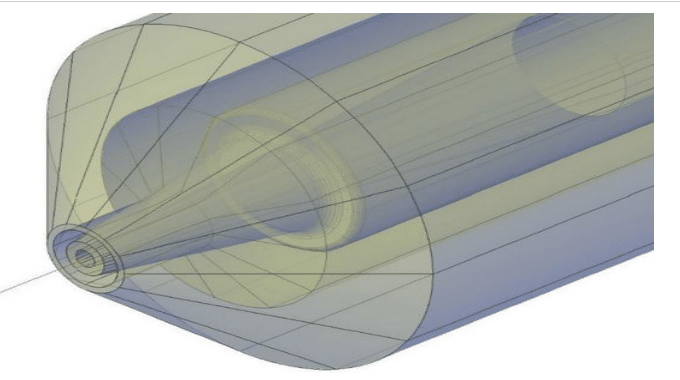
An air jet spinning machine drafts a sliver into a thin fiber strand. A fast air vortex then wraps the outer fibers around a nearly parallel core.
Modern machines let you run at 400 to 500 m/min, several times faster than ring spinning.
Core and Wrapper Fibers
When you look closely, an air jet yarn is made of two layers.
- Core fibers: run almost parallel to the yarn axis, with little or no twist.
- Wrapper fibers: loose fiber ends wind around the core in a spiral and hold the yarn together.
The number of fibers that become wrappers decides how strong your yarn is. Fibers shorter than about 12.5 mm add almost nothing.
Air Jet vs Vortex Spinning
The original Murata Jet Spinner (MJS) used two nozzles that applied false twist, so you needed a synthetic-rich blend.
Vortex spinning (Murata MVS) and single-nozzle systems, like the Rieter J-series, use one nozzle and a hollow or fixed spindle. This gives true wrapper twist and higher tenacity, and it lets you spin 100% combed cotton.
Why Are Blended Fibers Used in Air Jet Spinning?
You use blended fibers in air jet spinning because synthetic and regenerated fibers give the air nozzle the even length, strength, and friction it needs.
Cotton then gives you comfort and moisture absorption.
- Stable wrapping: fibers of uniform length, like polyester, cut fiber loss and end breaks in the nozzle.
- Higher tenacity: polyester, modal, and nylon make the yarn stronger, which balances the lower strength of air jet yarn compared with ring yarn.
- Lower raw material cost: in a blend, you can often use a slightly coarser, shorter cotton than a 100% cotton yarn would need.
- Targeted fabric properties: you can adjust pilling resistance, drape, moisture handling, and easy-care performance by changing the ratio.
Suitable Fiber Blends for Air Jet Spinning

The ideal blends for air jet spinning include polyester/cotton, viscose/cotton, modal or lyocell blends, and polyester/viscose.
All of them use fibers with a staple length of about 28 to 40 mm and low short-fiber content. How well your blend spins depends on fineness, friction, and strength.
Polyester and Cotton
Polyester/cotton (PC) is the most frequently used air jet blend, mainly in the medium count range around Ne 30.
Polyester provides strength and uniform length, while cotton provides absorbency and softness. Combed cotton gives you better evenness.
You will find it in shirting, sheeting, and work wear.
Viscose and Cotton
The uniform length and fineness of viscose make it easy for you to spin on air jet machines.
For vortex-spun viscose/cotton yarns, research shows that evenness, strength, and elongation all improve as the viscose content increases. Expect soft, drapery yarns for knitwear.
Modal and Lyocell Blends
Modal and lyocell are regenerated cellulosic fibers with higher wet strength than standard viscose.
In vortex yarn studies, regenerated cellulosic produce the best yarn structure, and modal raises tenacity. You can blend them with cotton or polyester for high-quality knitwear, underwear and home textiles.
Polyester and Viscose
Polyester/viscose (PV) combines the strength and crease resistance of polyester with the drape and moisture regain of viscose.
Both fibers have controlled cut lengths, so spinning stays consistent. You can find it in suiting, uniforms, and fashion fabrics.
Recycled Fiber Blends
You can spin recycled polyester, regenerated acrylic and recycled viscose on air jet machines, although recycled fibers are generally shorter and weaker.
To make a recycled blend work, you need a few steps.
- Mix the fibers twice in the blow room to make the blend more uniform.
- Use gentler opening and carding settings to avoid further fiber damage.
- Add a virgin fiber share to carry the yarn strength.
How Fiber Blending Ratio Affects Yarn Quality
The blend ratio directly controls the strength, evenness, hairiness, and hand of your air jet yarn.
In general, when you add more polyester or regenerated fiber, you raise strength and evenness, while more cotton improves comfort but adds imperfections.
Strength and Elongation
As the polyester content increases, the tensile strength of yarns and fabrics rises steadily. Nylon and viscose mostly increase breaking elongation.
Long polyester fibers increase strength but decrease elongation, making your yarn stiffer.
Evenness and Imperfections
The mass variation (CV%) and imperfection counts increase with the natural length variation and neps in cotton.
Vortex spinning research indicates that the PC ratio and delivery speed have a significant impact on thin places, thick places, and neps.
In one comparison, a cotton-rich 35/65 PC vortex yarn had about 30% more Classimat faults than the matching ring yarn.
Hairiness and Yarn Appearance
The hairiness of air jet yarns is lower than that of ring yarns because wrapper fibers bind the loose ends. Hairiness still changes with the blend.
- Long, coarse polyester mixed with cotton tends to create more long hairs.
- Fine polyester lets you run faster delivery speeds, but it can raise hairiness and imperfections.
Fabric Hand and Comfort
If you use a polyester-rich air jet yarn, it can give a harsher, stiffer fabric hand than ring yarns.
Adding more cotton, viscose, or modal softens the hand and improves absorbency. The trade-off is usually some loss of strength and pilling resistance.
Common Blend Ratios
| Blend | Typical Ratio | Key Yarn Traits | Common End Uses |
| Polyester/Cotton | 65/35 | High strength, good evenness, easy care | Shirting, workwear, sheeting |
| Polyester/Cotton | 50/50 | Balanced strength and comfort | Casual wear, T-shirts |
| Cotton/Polyester (CVC) | 60/40 | Softer hand, more imperfections | Knitwear, leisurewear |
| Viscose/Cotton | 70/30 | Soft, good evenness, good drape | Knit tops, dresses |
| Polyester/Viscose | 65/35 | Strong, crease resistant, consistent spinning | Suiting, uniforms |
Challenges of Spinning Different Fiber Blends

The major problems you face when spinning blends on air jet machines are poor blend uniformity, mismatched fiber lengths, uneven fiber migration, static lapping and fiber loss.
Most of them start in fiber preparation, so you should solve them before the sliver reaches the spinning machine.
- Uneven Fiber Mixing: When your fibers are not spread evenly, the yarn shows ratio changes along its length, which appear as streaks after dyeing. Blend in the blow room with multi-chamber mixers or at the draw frame, and use three drawing passages.
- Mismatched Fiber Lengths: Large differences in staple length cause poor drafting control and uneven wrapping. Select a polyester or viscose cut length close to the effective cotton length, and set the roller gauges for the main fiber.
- Fiber Migration Within the Yarn: Different fibers are not evenly distributed across the yarn cross-section, and in viscose/cotton yarns, viscose covers most of the surface. Since the surface fiber affects hand, dye uptake, and pilling, check cross-sections when looks and feel matter.
- Static Buildup and Roller Lapping: Polyester and other synthetics create static, particularly in low humidity, and then cling to drafting rollers. You can manage this with good climate control, a suitable antistatic spin finish, and top roller cots matched to the blend.
- Short Fibers and Fiber Loss: More than about 5% short fibers by weight significantly increases your end breaks and reduces tenacity, because short fibers blow away instead of wrapping. For cotton, combing with 12 to 20% noil removal and a staple length of at least 28 to 30 mm is recommended.
Evaluating Blended Yarns
The first step in evaluating blended air jet yarns is to confirm the actual blend ratio.
Then you check evenness, tensile properties and hairiness against your specification.
Verifying the Blend Ratio: chemical solubility tests
With chemical solubility tests, you dissolve one fiber and weigh what remains. Common methods are based on the ISO 1833 series and AATCC TM20A.
- Polyester/cotton: sulfuric acid dissolves the cotton and leaves the polyester behind.
- Viscose/cotton: formic acid and zinc chloride dissolve the viscose.
Test both the sliver and the yarn to make sure the ratio holds through processing.
Evenness and Imperfection Testing: CV%
Capacitive evenness testers, such as the Uster Tester, report several values you can use.
- CV%: the coefficient of mass variation along the length of the yarn.
- Thin and thick places: how many thin places (−50%) and thick places (+50%) appear per 1,000 m.
- Neps: the number of neps found per 1,000 m.
Compare your results with Uster Statistics benchmarks for the same blend and count.
Strength and Elongation Testing
Single-yarn tensile testing to ISO 2062 or ASTM D2256 measures tenacity (cN/tex) and breaking elongation (%).
High-speed testers like the Uster Tensorapid also help you find weak spots.
Hairiness Measurement
Uster hairiness (H) gives the total length of protruding fibers per centimeter of yarn.
Zweigle testers count hairs by length, and the S3 value (hairs 3 mm and longer) is most closely linked to pilling.
Conclusion
Blended fibers give you both the stability air jet spinning requires and the fabric performance your customers expect.
Select compatible fiber lengths, match the blend ratio to your end use, blend the fibers properly during preparation, and run ratio, evenness, tensile and hairiness tests on every lot.