
Comprehensive Guide to Elmendorf Tearing Testers
What makes a fabric strong enough to last? In the textile industry, one of the most important ways to judge fabric quality is by checking its tear strength—the ability of fabric to resist tearing when pressure is applied.
This property matters in all types of products, from military uniforms and parachutes to sails and everyday clothing. To measure this, the Elmendorf tearing tester is the global standard.
Also called a tear strength tester, it uses a pendulum system to recreate real-life tearing and provides accurate, reliable results. This makes it an essential tool for quality control and research.
In this guide, we will explain everything about the Elmendorf tester—how it works, why it matters, and how it supports textile professionals in ensuring fabric durability.
What is an Elmendorf Tearing Tester?
An elmendorf tearing tester is a special machine that measures how much force it takes to tear fabric.
Think of it like a controlled way to rip fabric and measure exactly how hard you had to pull. The machine has a heavy pendulum that swings down and tears the fabric in a very controlled way.
The tear strength tester gets its name from its inventor and works by converting the pendulum’s swing energy into tearing force.

When the pendulum drops, it pulls on one side of the fabric while the other side is fixed. This creates a tear that moves across the fabric in a straight line.
The machine then measures how much energy it took to make that tear happen.
Types of Elmendorf Tearing Testers
When selecting the right Elmendorf tearing tester, it is important to know the options available. The two main types are digital and manual testers. Each has its own benefits, depending on your testing needs, budget, and accuracy requirements.
Digital testers are best for high-volume labs and advanced quality control, offering speed, automation, and precise data handling. Manual testers, on the other hand, are cost-effective, simple to use, and ideal for smaller labs or training environments.
1. Digital Fabric Elmendorf Tearing Tester (YG033C)
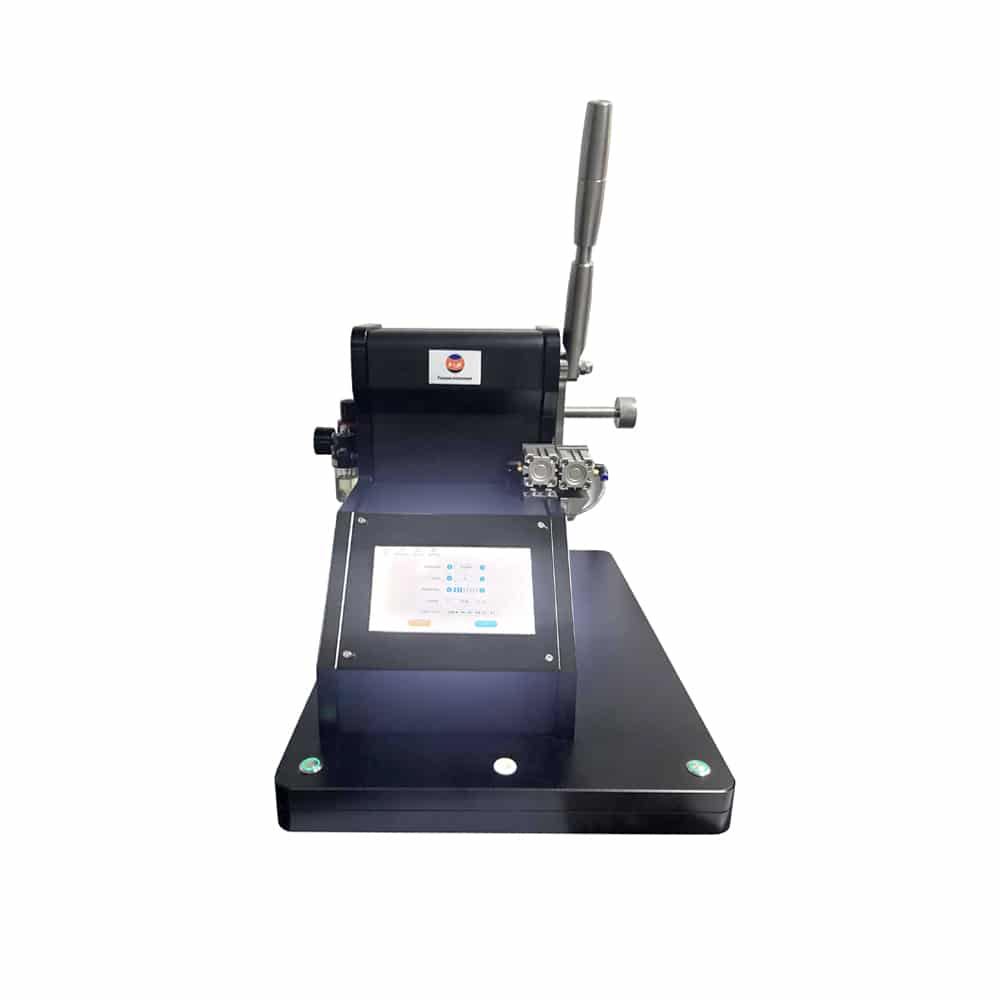
This is the most Digital Fabric Elmendorf Tearing Tester YG033C. It combines traditional testing with modern digital technology, so it’s super accurate and fast. With automated systems and computer integration it reduces human error and increases test reliability.
This is perfect for large labs, research institutions and production environments where quick, consistent and detailed results are key. It’s for professionals who need accuracy, automation and data management in one.
Features:
- Digital decoder with ±5% full scale accuracy
- Automatic force measurement, no operator error
- PC software for easy operation and analysis
- Automatic reporting and built-in printing
- Pneumatic clamping system for consistent testing
- Data storage for trend analysis and long term monitoring
2. Manual Elmendorf Tearing Tester (YG033A-II / YG033B-II)
This Manual Elmendorf Tearing Tester YG033A-II/YG033B-II is cheaper and just as good. Users worldwide have rated it highly for durability and performance over time.
This tester uses different weight pendulums so you can test light fabrics like cotton and heavy materials like canvas.
The hands on design allows you to control the process yourself, many experienced testers prefer this for seeing fabric behavior during tearing.

Features:
- Cheaper than digital models
- Strong and durable for long term use
- Adjustable pendulum weights for different fabric types
- Hands on operation with full user control
- Reliable results with consistent performance
- Preferred for educational and training purposes
Working Principle and Testing Method of the Elmendorf Tearing Tester

First you need to understand how the Elmendorf tearing tester works. This instrument measures how much force is required to tear fabric and it’s based on very simple but accurate physics.
By knowing the basic principle and the testing steps you can get clear and repeatable results.
1. Basic Principle
The Elmendorf tearing tester works on the principle of gravitational potential energy conversion. It uses a pendulum to store energy and then release it as force to tear fabric.
When you start the test the pendulum swings down and converts stored potential energy into kinetic energy. This energy is then applied to the fabric to see how easily it tears.
The test begins with a fabric sample that is already cut with a small slit. The fabric is placed between two clamps. When the pendulum swings it tears the fabric along this slit.
The tester then measures how much energy was used to complete the tear. This ensures every test uses the same amount of controlled force so you get accurate results.
2. Detailed Testing Methodology
To get correct results the testing method must follow strict steps. First you need to prepare the fabric sample. Standard samples are usually cut into 100mm long by 63mm wide. These samples must be cut using proper cutting dies to ensure they are uniform and defect free.
For woven fabrics you must also consider the direction of the yarns. The sample must be cut so the yarns in the shorter direction are aligned with the die.
This ensures the tearing happens between the yarns not cutting directly through them. This step is very important because fabric weave and structure can greatly affect results.
Once the sample is ready it is placed between the clamps of the tester. The pre-cut slit is carefully aligned at the bottom edge.
The pendulum is then lifted to a fixed position, usually 27.5 degrees from vertical. When released the pendulum swings through tearing the fabric across 43mm.
During this process the tester measures the maximum force required to complete the tear.
Older machines will show results on analog scales while modern testers use digital displays that automatically calculate and record results. Digital models also reduce human error and make data collection faster and easier.
3. Testing Conditions and Variables
Testing conditions are very important. Standard conditions are 21°C ± 1°C and 65% ± 2% relative humidity.
These conditions keep fabric moisture content stable. Fabrics can absorb or lose moisture so changes in humidity can make the fabric stronger or weaker.
Sometimes fabrics need to be tested in wet conditions. This is done by soaking the samples in distilled water before testing. Wet testing is useful for fabrics that will be exposed to rain, humidity or marine environments.
Examples are outdoor gear, tents, sails or industrial textiles used in damp conditions.
Testing under different environments makes results more practical and closer to real world applications.
Performance and Technical Parameters of Elmendorf Tearing Testers

The performance of an Elmendorf tearing tester depends on its measurement range, accuracy and features. Modern testers can handle a wide range of fabrics from light cotton to heavy-duty industrial textiles.
1. Measurement Capabilities and Ranges
Standard Elmendorf testers measure tearing strength from 0.5 to 32 Newtons. For heavier materials there are models that go up to 200 Newtons or more.
This means you can test not only clothing fabrics but also technical textiles, industrial filters or reinforced materials.
Not all of the instrument’s range is usable for accurate testing. Standard testers are most accurate between 20% and 80% of their full scale.
For heavy-duty testers the range is between 20% and 60%. Staying within these ranges avoids results that might be less reliable at the extremes of the scale.
2. Precision and Accuracy Specifications
Accuracy is one of the most important features of a tearing tester. High quality machines can achieve ±1% of full scale reading.
Repeatability, which means how close results are when the same test is done multiple times, is usually between 5% and 15% depending on the fabric type and test conditions.
The pendulum design plays a big role in this accuracy. Premium testers use precision bearings that reduce friction and allow the pendulum to swing smoothly.
The pendulum’s weight and center of gravity are also carefully balanced to ensure consistent results. This means every swing delivers the same amount of energy.
3. Advanced Features and Technology Integration
Modern Elmendorf testers go beyond basic measurements. They often have digital displays that show real-time results with better resolution than old analog models. Many also connect to computer systems for data management.
Some of the most advanced features include:
- Microprocessor control for automatic test sequences
- Statistical analysis tools like standard deviation and variation coefficients
- Customizable reports for easy sharing of results
- Pneumatic clamping systems that apply consistent pressure to every test
- Automatic friction correction to adjust for pendulum resistance
- LIMS integration for laboratory data management systems
These features save time, reduce human error and make data handling much easier.
4. Calibration and Maintenance Requirements
Like all testing equipment, Elmendorf testers need to be calibrated regularly. Most manufacturers recommend monthly calibration checks using certified weights equal to about 50% of the instrument’s full-scale range.
Calibration includes checking the cutting blades, cleaning the sensors and lubricating the pendulum bearings. If bearings wear out accuracy drops. Regular maintenance keeps the tester going for years.
Product Quality and Brand Reputation in the Market

When buying an Elmendorf tearing tester, you need to consider not only the features but also the brand and build quality. Good manufacturers mean better durability, support and training.
1. Leading Manufacturers and Product Lines
There are several well known companies that specialise in textile testing equipment. These companies offer a range of models from simple manual testers to fully automated digital machines.
Choosing a reputable manufacturer means you get proper documentation, training and after sales support.
Manufacturers with a good track record also have service networks to help with calibration, repair and upgrades. They also invest in product development to keep their testers up to date with international standards.
2. Quality Indicators and Performance Metrics
When judging quality look at the build of the instrument. Good testers use corrosion resistant metals, precision machined parts and durable electronic systems. A stable frame prevents vibrations that can affect test results.
Performance consistency is another indicator of quality. A good tester should show minimal drift, give the same results across repeated tests and work reliably in different environments.
Manufacturer warranties and validation data can also tell you how much the manufacturer believes in their product.
3. User Experience and Operational Reliability
Ease of use is just as important as accuracy. Good Elmendorf testers have clear displays, simple controls and straightforward operation. This reduces operator training time and minimises mistakes during testing.
Reliability is also critical. If the tester breaks down frequently it affects laboratory productivity. Good instruments minimise downtime and help you keep up with your testing schedule. User feedback and reviews are good sources of information on long term reliability.
Compliance with Industry Testing Standards

Results are only valid if they follow standards. The Elmendorf tearing tester must meet ASTM, ISO and other international standards so results are accepted across industries.
1. ASTM D1424 Standard Requirements
ASTM D1424 is one of the most widely used standards for Elmendorf testing. It defines the exact design and performance requirements for the tester. These include:
- Specific pendulum dimensions
- Clamp spacing tolerances of 2.5mm ± 0.25mm
- Clamp surface dimensions of at least 25mm by 15.9mm
- Pendulum axis positioned exactly 103mm from the upper clamp edge
These ensure the test is consistent and results can be compared across different labs.
2. ISO and International Standards Compliance
Apart from ASTM, ISO 13937-1 is the main international standard for Elmendorf testing. Instruments that comply with both ASTM and ISO standards produce results that are recognized worldwide. This is important for companies involved in global trade and research.
ISO standards also include more details on calibration, measurement uncertainty and reporting formats. Following them ensures credibility when working with overseas partners.
3. Regulatory and Certification Requirements
Some industries like aerospace or defense have extra testing requirements. Fabrics used in parachutes or protective clothing must meet stricter standards. In these cases the Elmendorf tester may need to be modified or have special configurations.
Traceability is also critical. Testers must be calibrated against national measurement standards so results are legally and scientifically valid. This is especially important for regulatory submissions or quality disputes.
Price, Cost-Effectiveness, and Maintenance Considerations
Making the right investment in equipment requires considering both initial costs and long term operational expenses. Understanding the total cost of ownership helps you make informed decisions that benefit your organization for years to come.

1. Initial Purchase Considerations
When buying an elmendorf tear strength tester, consider more than just the purchase price. Think about your testing volume, accuracy requirements and budget. A more expensive machine might save you money in the long run if it reduces testing time or improves accuracy.
Digital machines cost more upfront but have features that justify the extra cost. Automatic data recording saves operator time. Computer connectivity simplifies data management. These features become more valuable as your testing volume increases.
Manual machines cost less but require more operator time and skill. They’re often the right choice for smaller labs or educational institutions with limited budget but adequate operator expertise.
2. Operating Cost Analysis
The total cost of owning a tearing tester includes more than the purchase price. Calculate ongoing costs like calibration, maintenance and consumables. These costs continue throughout the machine’s life and can add up.
Operator training is another cost to consider. Digital machines require less training time as they are more automated. Manual machines need more skilled operators but the training might be more educational.
Downtime costs can be significant if your machine breaks down during peak periods. Reliable machines with good service support minimize these costs. Consider the manufacturer’s reputation for reliability and service quality.
3. Return on Investment
Your elmendorf tearing tester investment should pay for itself through better quality control and reduced product failures. Calculate how much poor quality costs your organization. This includes customer returns, warranty claims and damaged reputation.
The testing equipment helps prevent these costs by catching quality problems early. It also helps you optimize your products and processes to reduce material costs while maintaining quality. These savings often exceed the equipment cost within a few years.
For research institutions, the equipment enables new research projects and collaborations that can bring in funding. The ability to provide standardized testing services can also generate revenue from other organizations.
- Digital Fabric Elmendorf Tearing Tester YG033C: Advanced features, high precision and good for research and industrial labs.
- Manual Elmendorf Tearing Tester YG033A-II / YG033B-II: Affordable, durable and good for training or smaller labs.
Both models provide reliable results, but the choice depends on your budget, testing volume and automation needs.
Advanced Applications and Industry-Specific Considerations

Elmendorf testers are not only used for clothing fabrics. They play an important role in industries like aerospace, automotive, and construction.
1. Technical Textiles and Industrial Applications
Industrial fabrics like geotextiles, filtration fabrics, and composites need higher tearing strength than normal fabrics. Heavy-duty testers with extended force ranges are necessary for these applications. They help ensure safety and durability in critical industries.
Specialized applications may also require non-standard testing setups, depending on the type of material.
2. Research and Development Applications
In research, Elmendorf testers are essential for studying how fabric construction affects tear strength. They help compare fiber types, yarn structures, and finishing treatments.
Modern testers that connect with computers allow researchers to conduct detailed analysis and track performance trends. This speeds up product development and improves scientific results.
3. Quality Control Integration
Tear strength testing is an important part of quality control. Regular testing helps detect problems in raw materials or production before they reach customers.
By monitoring batch-to-batch variations, manufacturers can maintain consistent quality and reduce waste. Over time, this improves efficiency and strengthens customer trust.
Future Developments and Industry Trends

The textile testing industry is evolving with new technology and sustainability goals. Future Elmendorf testers are likely to be smarter, faster, and more environmentally friendly.
1. Technological Advancement Trends
Future testers may feature even greater automation, advanced data integration, and AI-based analysis. Machine learning could help predict fabric behavior, optimize testing methods, and detect patterns in data.
Integration with Industry 4.0 systems will also allow testers to directly connect with manufacturing lines, enabling real-time quality monitoring.
2. Sustainability and Environmental Considerations
With more focus on sustainability, testing equipment must also align with eco-friendly practices. Future Elmendorf testers may be designed to reduce power use, minimize waste, and support green labs.
Some models may also provide data that supports lifecycle analysis, helping manufacturers understand how fabrics perform over time and under environmental stress.
Frequently Asked Questions (FAQs)
Common questions about elmendorf tearing testers help clarify important aspects of equipment selection, operation, and maintenance for potential users.
Q1. What is the difference between digital and manual elmendorf tearing testers?
Digital testers use computer technology for automatic measurement and data recording, while manual testers require operators to read results manually.
Digital models offer higher precision and faster testing, but manual models cost less and give operators more direct control over the testing process.
Q2. How accurate are elmendorf tear strength test results?
Modern elmendorf tear strength testers achieve accuracy within ±1% to ±5% of full-scale measurement, depending on the model and calibration.
Digital models typically provide better accuracy than manual versions. Regular calibration and proper maintenance ensure consistent accuracy over time.
Q3. What types of fabrics can be tested with an elmendorf tearing tester?
Tearing testers can test most woven fabrics, non-woven materials, and some knitted fabrics. They work well for cotton, polyester, canvas, technical textiles, and industrial fabrics.
However, highly elastic fabrics or those that don’t tear in straight lines may not be suitable for elmendorf testing.
Q4. How often should I calibrate my tear strength tester?
Most manufacturers recommend monthly calibration checks using certified reference weights. Daily visual inspections and weekly operational checks help catch problems early.
Annual professional calibration ensures long-term accuracy and compliance with quality standards.
Q5. What maintenance is required for elmendorf tearing testers?
Daily maintenance includes cleaning the cutting blade and checking for fabric debris around sensors. Weekly maintenance involves checking clamp alignment and pendulum movement.
Monthly lubrication and annual professional service keep the equipment working properly for many years.
Q6. Which testing standards should I follow for elmendorf testing?
ASTM D1424 is the most widely used standard in North America, while ISO 13937-1 is common internationally. Some industries have specific standards based on these general requirements.
Choose standards based on your customer requirements and the markets where you sell your products.
Conclusion
Elmendorf tearing testers are essential tools for anyone working with textiles. They help you ensure quality, develop better products, and meet industry standards.
Whether you choose a digital model like the YG033C or a manual version like the
YG033A-II/YG033B-II, proper selection and use will improve your textile testing capabilities significantly.
Understanding how these machines work and what they can do helps you make better decisions about fabric quality and product development. Regular maintenance and proper operation ensure reliable results that you can trust for important quality decisions.
For reliable elmendorf tear strength testers that meet your testing needs, consider FYI’s proven solutions that deliver accuracy, durability, and value for textile testing applications worldwide.