

Comparison of Ramie Degumming Processes
Ramie is a perennial herbaceous plant known for its strong, lustrous fibers with excellent moisture absorption and breathability. However, due to the presence of pectin, hemicellulose, and other gummy substances, raw ramie is stiff and difficult to spin. Degumming removes these impurities through chemical, biological, or physical means, allowing the fibers to separate, soften, and improve in spinnability and dyeability. Common degumming methods include chemical and biological processes. The chemical method offers complete and efficient degumming but causes pollution and may damage fibers, whereas the biological method is eco-friendly and produces high-quality fibers, though it requires longer time and higher cost. Degumming quality directly affects the softness, luster, and subsequent spinning performance of ramie fibers.
This study compares biologically degummed and chemically degummed refined dry ramie fibers in terms of chemical composition, physical properties, and microstructure, aiming to analyze the fundamental differences between the two methods. The results help reveal how degumming affects fiber properties during spinning, contributing to better control of the biological process for stable fiber quality.
Degumming Processes
Biological Degumming Process
Raw ramie bundling → Pretreatment → Inoculation → Fermentation → Inactivation → Beating or Scutching → Washing → Oiling → Dehydration → Drying → Refined dry ramie.
- Microorganism: Strain T85–260; slant culture for 12–16 h at 35 °C; fermentation tank (200 L) at 34–35 °C, air flow 0.3–0.6 m³/min, pressure 30 kPa, time 5–6 h.
- Process details:
- Inoculation: 500 kg per batch, 15 min.
- Fermentation: No aeration, 8 h at 35–36 °C.
- Inactivation: Pressure 19.6 N, 3 g/L NaOH, 1 h.
- Beating: 4–5 rounds; synthetic oil used as lubricant; other steps follow conventional parameters.
Chemical Degumming Process
Acid soaking → Washing → First boiling → Washing → Second boiling → Washing → Acid washing → Washing → Refining → Washing → Oiling → Dehydration → Drying.
Parameters:
- Acid soaking: 1% H₂SO₄, 1 h, bath ratio 1:12, 50 °C.
- First boiling: 5% NaOH, 4% Na₂SiO₃, 1.5 h, bath ratio 1:12, 100 °C.
- Second boiling: 12% NaOH, 4% Na₂SiO₃, 2% Na₅P₃O₁₀, 2 h, bath ratio 1:12, 100 °C.
- Acid washing: 2 g/L, room temperature, 5 min, bath ratio 1:20.
- Refining: 2% NaOH, 3% Na₂SiO₃, 1% DBS, 3 h, bath ratio 1:10, 100 °C.
- Oiling: 1.5%, room temperature, 30 min, bath ratio 1:1.
Chemical Composition and Residual Gum Content of Ramie Fibers
Raw ramie contains various chemical components — about 70% cellulose and roughly 30% non-cellulosic substances, collectively known as gums. Determining the chemical composition of raw ramie, semi-finished products from different degumming stages, and refined dry fibers provides a reliable basis for optimizing the degumming process and evaluating fiber quality.
According to GB 5888–1989 (Quantitative Analysis Method for the Chemical Composition of Ramie), the chemical composition and residual gum rate of raw ramie, biologically degummed ramie, and chemically degummed ramie were determined. Each sample was tested in triplicate, and the average results are shown below:
| Sample | Fat & Wax | Water-Soluble Substances | Pectin | Hemicellulose | Lignin | Residual Gum Rate (%) |
| Raw Ramie | 1.29 | 8.40 | 7.80 | 13.13 | 1.84 | — |
| Biologically Degummed | 0.97 | 0.56 | 0.90 | 2.16 | 0.55 | 3.9 |
| Chemically Degummed | 0.37 | 0.22 | 0.95 | 2.08 | 0.37 | 2.73 |
From the table, it can be observed that biologically degummed fibers show slightly higher levels of non-cellulosic components and residual gum than chemically degummed fibers, though the difference is minor and both meet spinning quality requirements. Hemicellulose accounts for about 40% of the remaining gums, indicating that its removal is crucial during degumming.
Physical Properties of Ramie Fibers
The mechanical properties of fibers
Ramie fibers have the highest tensile strength and modulus among natural fibers, but due to their low elongation and small breaking work, they exhibit poor elasticity, crease recovery, and abrasion resistance, making fabrics somewhat stiff and prickly to wear.
The following table shows the measured tensile properties of the two types of refined dry ramie fibers. Tests were conducted using an electronic single-fiber strength tester under the following conditions: gauge length 30 mm, tensile speed 20 mm/min, pre-tension 0.196 cN, temperature 20 ± 2 °C, and relative humidity 65 ± 2 %. Each sample included 50 randomly selected fibers, and the average values are reported.

| Fiber Type | Breaking Strength (cN) | Breaking Elongation (cN) | Elongation Rate (%) | Breaking Work (mJ) | Initial Modulus (cN/dtex) |
| Biological | Avg: 67.079 CV: 14.767% | Avg: 1.115 CV: 12.02% | Avg: 3.718 CV: 12.02% | Avg: 0.327 CV: 24.79% | Avg: 163.5 CV: 20.733% |
| Chemical | Avg: 57.273 CV: 14.929% | Avg: 1.272 CV: 16.395% | Avg: 4.242 CV: 16.395% | Avg: 0.318 CV: 23.194% | Avg: 152.9 CV: 35.893% |
As shown above, biologically degummed fibers exhibit higher breaking strength, breaking work, and initial modulus than chemically degummed fibers, while their elongation and elongation rate are lower, but more uniform. This superior strength likely results from the gentler biological treatment, which avoids harsh acid and alkali conditions that can damage the fiber structure, thereby better preserving the natural properties of ramie.
Fiber Softness

The softness or stiffness of ramie fiber is expressed by its bending deflection or twist count under specified conditions. The twist test measures the number of twists a fiber bundle can endure before breaking — the higher the breaking twist number, the softer the fiber.
The table below shows the softness test results of two refined ramie fibers, measured according to GB/T 124 (Jute, Kenaf, and Roselle Fiber Softness Test Method) using a Y331A Yarn Twist Tester.
Given the high strength of ramie, each test sample consisted of 10 fibers with similar fineness, and the clamping distance was 10 cm. Each type of fiber was tested 20 times, and the average value was calculated.
| Sample | Breaking Twist Count (twists·(10 cm)⁻¹) | CV (%) |
| Biologically degummed | 192.8 | 6.45 |
| Chemically degummed | 171.6 | 10.23 |
The results show that the biologically degummed fiber has a slightly higher average breaking twist count than the chemically degummed fiber. A T-test indicates a significant difference at the 5% significance level, confirming that biological degumming produces softer fibers. Softer fibers twist and bend more easily, have better inter-fiber cohesion, and produce fewer long hairs, improving yarn smoothness and spinnability.
Fiber Friction Properties
The friction coefficient is an important surface parameter of textile fibers. The table below lists the dynamic and static friction coefficients of the two refined ramie fibers, measured using a Fiber Friction Coefficient Tester. The test was conducted with a 200 mg tension clamp, roller speed of 30 r/min, and three repeated measurements per fiber (six fibers per type).
| Roller Material | Dynamic Friction (Bio) | Static Friction (Bio) | Dynamic Friction (Chem.) | Static Friction (Chem.) |
| Metal Roller | 0.3905 | 0.4350 | 0.2987 | 0.3388 |
| Rubber Roller | 0.4288 | 0.5594 | 0.3252 | 0.5084 |
| Ramie Roller | 0.2603 | 0.3422 | 0.2303 | 0.3038 |
The results show that biologically degummed fibers have higher friction coefficients than chemically degummed fibers. This indicates better inter-fiber cohesion, aiding in fiber drafting and sliverformation, which improves yarn evenness during spinning.
Fiber Crimp Properties
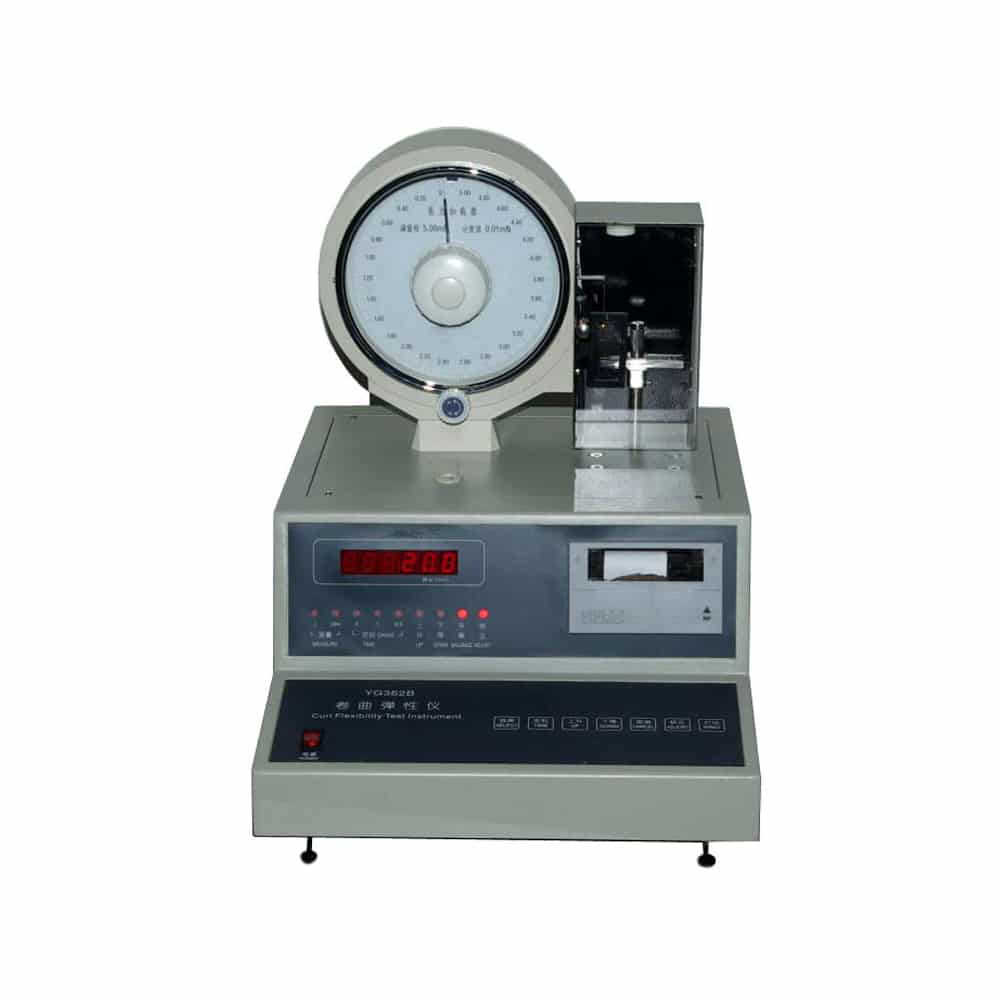
Fiber crimp enhances mechanical entanglement, improving web formation and cohesion during processing. The table below presents crimp performance results measured with a YG362B Crimp Elasticity Tester (20 fibers per sample).
| Fiber Type | Crimp (%) | Crimp Recovery (%) | Crimp Elasticity (%) | CV (Crimp) | CV (Recovery) | CV (Elasticity) |
| Biologically degummed | 3.59 | 1.64 | 45.87 | 18.84 | 20.33 | 15.15 |
| Chemically degummed | 2.69 | 1.08 | 40.73 | 19.72 | 20.40 | 12.82 |
As shown, biologically degummed fibers exhibit higher crimp degree, recovery rate, and elasticity than chemically degummed fibers. Crimp degree and recovery reflect durability and stability of crimp, while crimp elasticity represents recovery ability after deformation. Thus, biologically degummed ramie fibers have better crimp elasticity, leading to improved fiber cohesion, web formation, and spinning performance.
Whiteness
According to the national standard GB/T 20793–2006, whiteness is an important quality index for refined ramie fibers. Biologically degummed ramie, without bleaching treatment, retains a natural beige tone and is known as natural-colored refined ramie. Although its whiteness does not meet the standard requirements, this does not affect the final product quality, since subsequent textile pretreatments — such as desizing, scouring, bleaching, and mercerizing — can effectively remove residual color. Therefore, the sodium hypochlorite bleaching process can be omitted, and whiteness testing or evaluation is unnecessary.
Hard Strips (Fiber Agglomeration)
Hard strips and fiber bundling are key indicators of degumming quality and have a significant impact on spun yarn quality. Currently, there is no unified standard for testing hard strips.
In this experiment, a fixed amount of fiber was combed evenly; after the same number of combings, single fibers and bundled fibers were manually separated. The percentage of bundled fibers by mass represents the degree of hard strip formation.
| Sample | 1 | 2 | 3 |
| Biologically degummed | 15.74 | 9.81 | 14.64 |
| Chemically degummed | 1.82 | 4.28 | 2.05 |
As shown, biologically degummed ramie has a significantly higher bundled fiber rate than chemically degummed ramie, though this difference becomes negligible after combing — indicating the presence of false hard strips, which can be easily dispersed by hand.
The likely cause is that chemical degumming removes pectin and hemicellulose more completely, allowing fibers to separate easily during combing. In contrast, biological degumming leaves a small amount of residual gum, causing slight fiber adhesion. Enhancing fiber beating and washing during biological degumming can effectively reduce hard strip formation.
Conclusion
Biological and chemical degumming differ fundamentally in their mechanisms. Biological degumming relies on bacterial metabolism to break down and remove gum substances, while chemical degumming achieves this through strong alkali reactions.
Although biologically degummed ramie fibers retain slightly higherresidual gum content, they still meet the quality requirements for spinning. Moreover, biologically degummed fibers show higherstrength, better softness, greater crimp elasticity, and higher frictional cohesion, which promote fiber web formation and yarn spinning stability.
Importantly, biological degumming is an eco-friendly, low-energy, and cost-effective process that minimizes pollution and fiber damage. It represents a sustainable alternative to traditional chemical degumming and holds strong potential for industrial-scale application and green textile production.