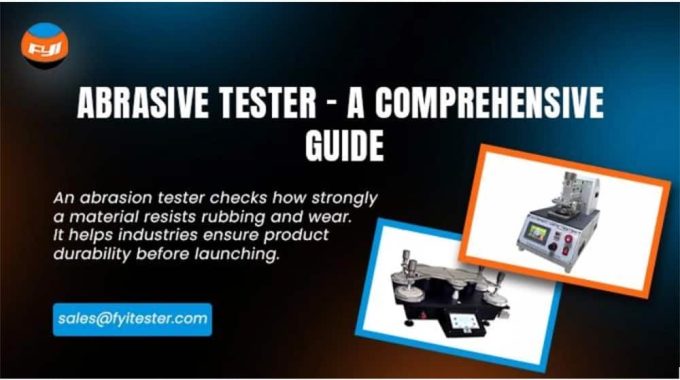
Abrasion Tester – A Comprehensive Guide
Every material we use in daily life—fabric, rubber, plastic, leather, flooring, and coatings—faces friction. This friction slowly removes surface layers, causing wear, fading, scratches, or even total material failure.
To make sure products can survive real-world use, manufacturers rely on an abrasion tester, a special machine designed to measure how strong a material is against rubbing, repeated contact, and surface damage.
Understanding abrasion resistance is important for industries like textiles, automotive, packaging, footwear, construction, and electronics.
A reliable abrasion testing machine helps brands check product durability before releasing it into the market. This ensures quality, reduces customer complaints, and builds long-term trust.
In this comprehensive guide, we will explain what an abrasion tester is, the main types used in laboratories, how they work, key performance parameters, pricing, standards, and how to choose the right model for your needs.
What is Abrasion Tester?

An abrasion tester is a laboratory machine used to measure how well a material can resist wear caused by rubbing, friction, or repeated surface contact.
The goal is to reproduce real-life abrasion conditions in a controlled way, allowing manufacturers to evaluate durability and compare material quality.
Different industries use different types of abrasion testers depending on the product.
For example, fabrics are commonly tested using a martindale abrasion tester, while flooring, leather, and coatings often use a taber abrasion tester. More complex materials may require a universal wear tester.
Overall, an abrasion tester helps ensure that products meet performance expectations, pass international standards, and remain durable throughout their life cycle.
Types of Abrasion Testers
Abrasion testers come in several models, each designed for specific materials and testing methods. Below are three widely used machines. Before discussing them individually, it is important to understand that every abrasion testing machine is selected based on product type, friction pattern, and international test standards.
Here are the three most common and reliable types:
1. Martindale Abrasion and Pilling Tester YG401 Plus

The Martindale Abrasion and Pilling Tester YG401 Plus is a highly reliable machine designed specifically for textile durability testing. It evaluates how fabrics respond to continuous rubbing by creating controlled circular friction, simulating real-life wear conditions.
This makes it ideal for checking both abrasion resistance and pilling formation in garments, upholstery, and home textiles.
The YG401 Plus is an upgraded model that offers greater stability, improved accuracy, and more efficient multi-sample testing.
Its advanced control system ensures uniform pressure distribution, helping laboratories maintain consistent and repeatable test results. Because of its precision, this machine is widely used in textile factories, quality-control labs, and research institutions.
- Multi-station design for testing several samples at once
- High-precision pressure control for consistent results
- Stable drive system for smooth and accurate motion
- Touchscreen or digital interface depending on configuration
- Suitable for both abrasion and pilling tests
- Complies with ISO 12947 and ASTM D4966 standards
- Durable construction designed for long-term laboratory use
- Easy-to-change abrasion fabrics and sample holders
2. Universal Wear Tester DW5430

The Universal Wear Tester DW5430 is a multifunctional machine designed for industries that work with diverse materials. It supports multiple test methods, making it highly versatile for evaluating textiles, leather, plastics, flooring, rubber, and coated surfaces.
Instead of buying separate machines for different wear tests, manufacturers can use the DW5430 to perform a wide range of abrasion and durability assessments.
This tester is ideal for companies that need flexibility and advanced performance. It can replicate real-life friction patterns through different motions—linear, rotary, flexing, edge wear, and more.
Its robust structure and adjustable settings make it suitable for research labs and industrial production environments where accurate and repeatable results are essential.
- Multiple test modes: rotary, linear, flexing, and edge wear
- Suitable for a wide range of materials
- Adjustable load and speed settings
- High stability and repeatability during long test cycles
- User-friendly control interface
- Strong and durable mechanical structure
- Easy sample installation and quick-change attachments
- Compliant with multiple international wear-testing standards
3. ASTM D3884 Taber Abrasion Tester YG522N

The ASTM D3884 Taber Abrasion Tester YG522N is widely known as the industry standard for evaluating abrasion resistance of coatings, plastics, leather, paper, and flooring materials.
It uses rotating abrasive wheels that create a wear pattern similar to what materials experience during real use. This helps manufacturers understand surface durability and product longevity with high accuracy.
The YG522N model is engineered to meet ASTM D3884 requirements, ensuring global acceptance of test results.
Its controlled rotation system, precise load settings, and stable performance make it ideal for labs that require reliable and repeatable abrasion testing.
Because of its accuracy and strong design, the Taber tester is often used in automotive, flooring, packaging, and coating manufacturing industries.
- Dual rotary abrasive wheels for uniform wear
- Precise load selection for accurate testing
- Stable motor and rotation system
- Highly repeatable test results
- Suitable for plastics, coatings, leather, and flooring
- Complies with ASTM D3884 and related global standards
- Easy wheel replacement and maintenance
- Designed for high-speed testing environments
Working Principle and Testing Method of the Equipment

Abrasion testers are designed to measure how materials respond when they are rubbed, scratched, or worn down by friction.
The basic working principle is simple: the machine creates controlled friction between the sample and an abrasive surface, allowing users to see how much damage occurs over time.
This helps manufacturers understand whether a fabric, plastic, coating, leather, or flooring material can withstand real-world use.
Although all abrasion testers work on the same idea—controlled friction—the method changes depending on the machine type.
The Martindale abrasion tester uses a unique Lissajous movement, which is a gentle, circular rubbing motion. This motion closely imitates the way fabrics rub during daily use, such as when clothes brush against furniture or when upholstery experiences repeated contact.
Because of this, it is widely used for textile testing. The machine applies a constant pressure on the sample, and small abrasive pads rub the fabric in repeating circular paths, allowing users to check both abrasion resistance and pilling behavior.
The Taber abrasion tester works differently. It uses two rotating abrasive wheels positioned on top of the sample. As the sample disc spins under the wheels, the wheels grind against the surface, creating a realistic wear pattern.
This method mimics the kind of wear seen on flooring, plastic panels, coatings, and leather products. The pressure, wheel type, and rotation speed can be adjusted to match different testing standards, making the Taber method ideal for evaluating surface durability.
The universal wear tester is the most versatile machine because it supports many different rubbing motions. It can perform rotary abrasion, linear rubbing, reciprocating movement, flexing, and even edge abrasion.
This allows it to test materials like textiles, leather, flooring, rubber, and coated surfaces. Manufacturers who work with many product types prefer this tester because it can simulate multiple real-life wear conditions using a single machine.
General Testing Method
Even though each machine has unique mechanics, the overall testing procedure is similar:
- The sample is prepared according to the required standard.
- It is mounted or clamped securely onto the test holder.
- The correct load or pressure is applied.
- The abrasion cycle begins, running for a set number of rubs, rotations, or movements.
- After the test, wear is measured by weight loss, thickness reduction, or visual inspection.
This controlled process provides a reliable way to understand how long a material can last and how it behaves under repeated friction, helping ensure accurate and meaningful durability evaluations.
Performance and Technical Parameters of the Equipment

When selecting an abrasion testing machine, understanding its performance and technical parameters is crucial.
These parameters not only determine the accuracy and reliability of the test results but also affect the efficiency, versatility, and suitability of the machine for your specific applications.
Whether you are testing textiles, leather, plastics, coatings, or flooring materials, each performance factor plays a vital role in achieving consistent and meaningful results.
1. Load Capacity
The load capacity of an abrasion tester determines the amount of pressure that can be applied to the sample during testing.
Different materials require different levels of force to simulate real-world wear. For example, thick leather or coated fabrics need higher pressure, while delicate textiles require low pressure to avoid excessive damage.
Machines like the Martindale YG401 Plus and Taber YG522N allow precise adjustment of load, ensuring that the material is tested under optimal conditions without compromising test accuracy.
2. Speed and Cycle Counts
Speed and the number of cycles are critical parameters that define how long and how vigorously a sample is tested.
High cycle counts allow long-term durability testing, which helps predict the product’s lifespan under normal or heavy usage. Machines with adjustable speed settings can simulate different wear scenarios.
For instance, fast rotations on a Taber abrasion tester can mimic heavy foot traffic on flooring, while slower speeds are better for delicate fabrics.
Having control over these parameters ensures that the test results are both realistic and reproducible.
3. Abrasive Type Compatibility
The type of abrasive used directly affects test outcomes.
Some machines are compatible only with specific abrasive wheels, fabric pads, or sandpapers. This versatility is particularly important when testing different types of materials.
For example, a universal wear tester DW5430 can accommodate multiple abrasive types for textiles, leather, plastics, and coated surfaces, making it suitable for mixed-material production environments.
Proper selection of abrasive ensures that the wear pattern accurately reflects real-world usage.
4. Test Station Quantity
The number of test stations determines how many samples can be tested simultaneously.
Machines with multiple stations, like the Martindale YG401 Plus, allow laboratories to test several samples at once, increasing efficiency and throughput.
This is particularly valuable in industrial settings where high-volume testing is required, or when comparing multiple material samples under identical conditions.
5. Control System
Modern abrasion testers come with advanced control systems that enhance precision and user convenience.
Features may include digital interfaces, touchscreen controls, real-time monitoring, automatic shutdown, and programmable test cycles.
These systems reduce human error, ensure repeatable results, and make the operation of the machine easier for laboratory personnel.
6. Accuracy and Repeatability
Accuracy and repeatability are fundamental for reliable testing. Consistent pressure, rotation speed, and movement paths ensure that results are comparable across multiple tests and laboratories.
Advanced machines like the Taber YG522N and Martindale YG401 Plus are engineered for stable drive systems and precise pressure application, guaranteeing that each test cycle produces uniform wear patterns.
7. Sample Size Compatibility
Different materials come in various sizes, and the machine must accommodate them. Larger fabrics, coated sheets, or thick materials may require bigger test plates or adjustable clamps.
Machines with flexible sample mounting options allow testing of a wide range of materials without compromising the accuracy of results.
8. Overall Performance Considerations
When assessing the performance of an abrasion testing machine, it is essential to consider all these parameters together.
Machines that offer adjustable load, versatile abrasive compatibility, multiple test stations, advanced digital controls, high accuracy, and sample flexibility provide the most reliable and cost-effective solution for industrial and research laboratories.
By carefully evaluating these technical parameters, you can select an abrasion testing machine that not only meets your testing requirements but also enhances laboratory efficiency, ensures consistent product quality, and delivers trustworthy results across multiple applications.
Product Quality and Brand Reputation

When selecting an abrasion tester, product quality and brand reputation are among the most important factors to consider.
The reliability and accuracy of your testing results depend heavily on the machine’s build, components, and the manufacturer’s expertise.
Investing in a high-quality, well-established brand ensures consistent performance, reduces laboratory downtime, and improves overall test efficiency.
1. Importance of Build Quality
A robust and carefully engineered machine is essential for accurate and repeatable test results.
High-quality abrasion testers, including martindale abrasion testers, taber abrasion testers, and universal wear testers, are built with durable frames, precision components, and stable drive systems.
A solid mechanical structure reduces vibrations and maintains uniform pressure on the sample, which is critical for obtaining reliable data. Poorly built machines can lead to inconsistent results, frequent breakdowns, and increased maintenance costs.
2. Durable Components for Long-Term Performance
High-quality abrasion testers use premium materials for key components such as:
- Motors: Precision motors ensure smooth operation and consistent rotational speed.
- Abrasive wheels and test heads: Made from wear-resistant materials to deliver accurate friction and long-lasting performance.
- Sample holders and clamps: Designed to securely hold specimens without slipping or causing deformation during testing.
Durable components not only extend the life of the machine but also maintain testing accuracy over years of laboratory use. This is particularly important in research institutions and industrial quality control where long-term reliability is critical.
3. Reliable Calibration and Accuracy
Accuracy is the cornerstone of effective abrasion testing. Reputable brands provide machines that are factory-calibrated and can be easily re-calibrated in the lab to maintain compliance with international standards.
Accurate calibration ensures that results are comparable across different laboratories and industries, which is essential for certifications, quality control, and product development.
Modern machines often include digital interfaces and automated cycle counters, allowing precise control over test parameters and ensuring repeatable results for each sample.
This level of precision is particularly valuable for laboratories conducting large-scale testing or comparing multiple materials under identical conditions.
4. Customer Support and Spare Parts Availability
A well-known manufacturer offers more than just high-quality machines—they provide comprehensive support. This includes:
- Technical assistance for installation, setup, and troubleshooting
- Access to genuine spare parts to avoid compatibility issues
- Training and guidance on machine operation
- Quick response to maintenance requests to reduce downtime
Having reliable customer support is especially important when dealing with advanced abrasion testing machines, where even small operational errors can affect test results.
5. Reputation and Trustworthiness of the Brand
Choosing a reputable manufacturer ensures peace of mind. Established brands have a proven track record of producing machines that consistently meet international testing standards such as ISO, ASTM, and GB/T.
Their products are widely used in textile, coating, flooring, leather, and industrial material testing laboratories.
Brands known for their quality, innovation, and reliability often receive positive feedback from customers, including laboratories and industrial users.
Investing in a well-regarded brand minimizes operational risks, provides long-term reliability, and enhances the credibility of your test results.
Does the Equipment Comply with Industry Testing Standards?

When selecting an abrasion tester, one of the most critical considerations is whether the machine complies with recognized industry testing standards.
Standard compliance ensures that the test results are accurate, reliable, and globally accepted. It also allows manufacturers, laboratories, and quality control personnel to benchmark material performance consistently.
Abrasion testing standards vary depending on the type of material, testing method, and industry application. Using a non-compliant machine can result in inconsistent data, misinterpretation, and non-acceptance of results in certification or quality audits.
International Standards for Abrasion Testing
High-quality abrasion testing machines like the Martindale abrasion tester YG401 Plus and Taber abrasion tester YG522N are designed to meet global standards. Some of the most commonly used standards include:
ASTM D3884: This standard is widely used for the Taber abrasion tester and covers abrasion resistance testing of plastics, coatings, leather, and other materials using rotating abrasive wheels. It ensures that the wear test simulates real-life friction conditions accurately.
ISO 12947: This standard is applied for the Martindale abrasion and pilling tester. It provides guidelines for testing fabrics to determine abrasion resistance and pilling formation. Compliance ensures consistent results for textiles, woven fabrics, and nonwovens.
ASTM D4966: Another textile-focused standard, ASTM D4966 is used for evaluating fabric abrasion resistance using the Martindale method. It ensures uniformity in testing conditions and data reporting.
ISO 5470: This standard is important for machines using rotating abrasive wheels, such as the Taber tester. It specifies test conditions, load parameters, and wheel types to ensure repeatable and reliable results.
ASTM D3886: This standard applies to linear rubbing methods for materials such as paper, textiles, and flexible films. Machines compliant with ASTM D3886 can perform precise linear wear tests for these materials.
Other ISO, EN, and GB standards: Depending on material type and region, different ISO (International Organization for Standardization), EN (European Norms), and GB (Chinese national standards) may apply. These ensure that the abrasion testing machine meets regional regulatory and industrial requirements.
Why Compliance Matters?
Compliance with these standards has several advantages:
- Global Acceptance: Test results are recognized internationally by manufacturers, suppliers, certification bodies, and research institutions.
- Accuracy and Repeatability: Standardized test methods ensure that results are consistent across different laboratories and over repeated testing cycles.
- Quality Assurance: Compliance guarantees that the abrasion testing machine accurately measures material durability, helping manufacturers identify weak points in products.
- Customer Confidence: Products tested with standard-compliant machines instill trust in buyers, end-users, and auditors.
Machines like the Martindale YG401 Plus and Taber YG522N are specifically engineered to meet these standards. They come with precise load control, adjustable cycle counters, and interchangeable abrasive materials to fulfill international requirements.
By adhering to these standards, the machines provide reliable, reproducible, and valid test results across industries such as textiles, flooring, coatings, plastics, and leather.
Price, Cost-Effectiveness, and Maintenance Requirements of the Equipment

When choosing an abrasion testing machine, it is important to consider not only the initial purchase price but also the long-term cost-effectiveness and maintenance requirements.
These factors significantly impact the overall efficiency, reliability, and longevity of the equipment in laboratories, research institutions, or manufacturing facilities.
Price Considerations
The cost of an abrasion tester depends on its type, functionality, precision, and the range of tests it can perform.
Basic models that provide standard abrasion testing for fabrics or simple materials usually fall into a medium price range and are suitable for textile laboratories or small-scale quality control facilities.
More advanced machines that offer high-precision testing, multi-sample capabilities, or compliance with international standards tend to be priced higher.
Multifunctional machines capable of performing several types of wear and abrasion tests on diverse materials—such as textiles, plastics, coatings, and leather—are generally at the top end of the price spectrum.
Although the upfront cost is higher, these versatile machines can replace multiple single-function devices, which can reduce overall laboratory equipment costs over time.
Cost-Effectiveness Considerations
A cost-effective abrasion tester is one that delivers value over the long term. Key factors to evaluate include:
- Durability and stability: Machines made with high-quality materials and strong construction reduce the need for frequent repairs.
- Accuracy and repeatability: Reliable, precise results help maintain quality control and improve research validity.
- Versatility: Equipment that supports multiple testing methods or can handle a wide range of materials maximizes utility and reduces the need for additional devices.
- Ease of operation and maintenance: Simple, user-friendly systems save time, reduce operator errors, and minimize downtime.
- After-sales support: Access to spare parts, technical guidance, and warranty services ensures uninterrupted operation.
Investing in a well-built, accurate, and easy-to-maintain machine ensures long-term cost-effectiveness by reducing replacement, repair, and operational expenses.
Maintenance Requirements
Regular maintenance is essential to ensure consistent performance and extend the service life of an abrasion tester. Routine maintenance tasks typically include:
- Replacing wear components: Abrasive wheels, fabric pads, or friction materials must be replaced when worn to maintain testing accuracy.
- Cleaning test surfaces and sample holders: Dust, debris, or residue can affect results, so keeping the machine clean is essential.
- Calibration: Periodic calibration guarantees compliance with testing standards and ensures accurate measurements.
- Lubrication of moving parts: Proper lubrication reduces mechanical wear, prevents breakdowns, and ensures smooth operation.
- Software updates (for digital models): Updating the control software ensures precise test cycles, accurate timing, and reliable data recording.
Consistent maintenance not only ensures the reliability and repeatability of test results but also prevents costly downtime and preserves the overall value of the equipment.
Conclusion
An abrasion tester is essential for accurately assessing material durability and wear resistance across industries such as textiles, automotive, coatings, and footwear.
Choosing the right machine ensures consistent product quality, reliable test results, and operational efficiency.
Multi-directional testers provide precise assessment for fabrics, while versatile wear testers handle multiple materials and test methods.
Standard-compliant machines offer high repeatability and industry recognition, making them indispensable for research labs and production facilities.
Key factors to consider include performance, testing method, compliance with standards, brand reputation, and cost-effectiveness. Investing in a high-quality abrasion testing machine improves efficiency, reduces material waste, and strengthens credibility. Explore reliable and professional solutions today at FYI Tester!