Washing Fastness Tester Standards: ISO 105 C06 & AATCC 61 Guide
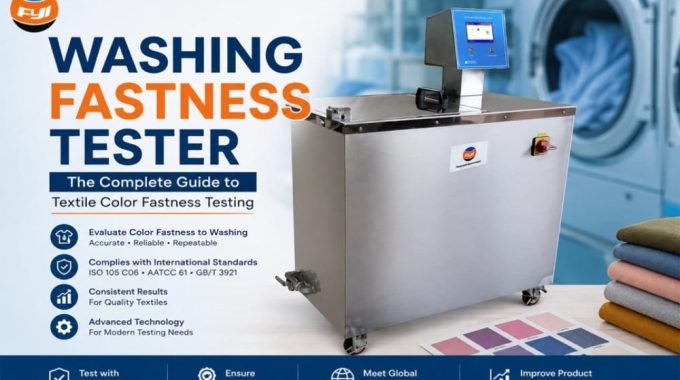
A washing fastness tester is an essential textile testing machine for assessing color fastness to washing, ensuring the fabric stays colored and won’t stain when washed. It simulates the actual washing process and can be used to measure washing fastness and color fastness to washing to ensure product quality and meet international standards for manufacturers.
There are many testing methods that give standardized procedures for reliable and repeatable results, such as colour fastness to washing, which is presented by ISO 105 C06, AATCC 61, and GB/T 3921. This guide explains how a washing fastness tester operates, compares key standards, and outlines the advantages and disadvantages of washing fastness testing equipment.
What Is Color Fastness to Washing?
Washing fastness is the ability of a fabric to withstand colour loss when washed and to not stain other fabrics. This is used to determine the ability of dyes to withstand the effects of water, detergent, heat and mechanical action in the fibre. Fabrics that have a high washing fastness will remain the same after washing multiple times, and fabrics that have low washing fastness may be prone to fading or transferring color to neighboring fabrics.
The colour fastness testing methods which are employed in textile laboratories for the evaluation of colour fastness to wash are ISO 105 C06, AATCC 61 and GB/T 3921. These tests are undertaken on a washing fastness tester which will simulate the controlled washing conditions under which the tests are to be carried out and will give an indication of both the colour fading and the staining. The results are used to enable manufacturers to ensure product quality, meet international standards and provide durable and color-stable textiles to consumers.
Standards for Washing Fastness Testing: ISO, AATCC, and GB Methods

The international standards guarantee that the color fastness to washing is tested comparably, enabling manufacturers, testing laboratories, and buyers to compare the results with confidence. Depending on the market and the requirements of the textiles being tested, the right standard is to be used for either apparel, home textiles, or fabrics for industrial applications. These standardized washing methods are supported by reliable washing fastness testers, which will provide accurate and repeatable test results.
Standards for Washing Fastness Testing
| Standard | Region | Typical Use | Key Feature |
| ISO 105 C06 | International | Export textiles | Multiple washing procedures |
| AATCC 61 | North America | Apparel testing | Accelerated laundering |
| GB/T 3921 | China | Domestic manufacturing | ISO-based method |
ISO 105 C06: The International Standard
Colour fastness to washing – ISO 105 C06 is a recognised international standard that determines the washing fastness of a colour. It mimics the washing processes that occur at home under controlled conditions with specific washing conditions (solution, temperature and wash cycles). Fabrics are then tested and assessed both for colour fading and staining onto adjoining materials using standardized grey scales. This is one of the most frequently used practices of exporters of textile goods to the world.
AATCC 61: The North American Standard
In the U.S. and in some other North American markets, AATCC 61 is the recommended test for assessing wash fastness of colors. It is different from traditional laundering tests that take multiple wash cycles in the home to represent the test, but carries out the testing process in accelerated washing conditions using stainless steel balls to represent multiple washing cycles. This way, you can get quick and accurate results in quality control and product development.
GB/T 3921: The Chinese National Standard
GB/T 3921 is the national standard in China for the washing fastness test for color. It is based on testing principles that are very similar to those established by ISO 105 C06, and is suitable for manufacturers that provide on domestic and international markets. This is the standard used by many textile laboratories to ensure conformance to Chinese quality standards and ensure that the laboratories are internationally accepted practice.
Why Standardized Testing Matters
The use of the internationally recognized standards provides objective washing fastness results that are repeatable and accepted in the international market. These methods, when used with a calibrated washing fastness tester, can aid textile manufacturers in meeting customer expectations, regulatory requirements, and producing consistently high-quality fabrics with excellent color fastness.
Read More: Top 10 Washing Fastness Tester Manufacturers
Difference Between ISO 105 C06 and AATCC 61 Washing Fastness Tests
Both ISO 105 C06 and AATCC 61 are widely used tests for assessing colour fastness to washing, but there are differences between the two tests in terms of testing procedure, equipment used and primary applications. These differences will guide manufacturers in choosing the most suitable standard, according to their intended market and customer needs.
Testing Purpose
This standard ISO 105 C06 is intended to represent the normal domestic laundering as it is carried out in a controlled manner and is thus considered to be the recommended standard for international laundering tests. AATCC 61 is designed to simulate the effects of several washing cycles in the home in a shorter amount of time, and is useful for quick quality control evaluations.
Test Procedure
The ISO 105 C06 method is a colour fastness test to washing that is done with specific detergent solutions, temperatures, and washing times, and measures both colour fading and staining. The method in AATCC 61 is similar but with the addition of stainless steel balls to provide more mechanical action and to speed the washing action.
Equipment and Materials
For both standards, a washing fastness tester (WFT) must be used to ensure a precise test temperature, test speed, and test conditions. But, during testing, there are more stainless steel balls required for AATCC 61 than ISO 105 C06, which uses only the standardised washing solution and adjoining fabrics.
Evaluation Method
Both methods evaluate the washing fastness in terms of the colour change of the test specimen and the transfer of colour to the neighbouring fabrics by means of standardised grey scales. The washing process is the same, but results might slightly differ due to the different washing conditions.
ISO 105 C06 vs. AATCC 61: A Side-by-Side Washing Fastness Comparison
Which Standard Should You Choose?

The choice of the testing standard will depend on your intended market and customer needs. Colour fastness to washing ISO 105 C06 is the most accepted worldwide and is a simulation of regular home laundry for textiles intended for export. When products are mostly exported to North America, AATCC 61 is frequently necessary since it conducts accelerated wash testing, providing earlier quality evaluation. No matter what the standard, the use of a calibrated washing fastness tester will provide accurate and repeatable measurements and provide manufacturers with a means of verifying color fastness to washing while meeting industry compliance requirements.
Conclusion
Measurement of washing fastness is key to verifying the quality of textiles, and it is important to use a reliable washing fastness tester for accurate evaluation of washing fastness. Using any of the three washing fastness test methods (ISO 105 C06, AATCC 61 or GB/T 3921) can contribute to the assessment of washing fastness, product durability and product consistency. Textile manufacturers and laboratories can ensure reliable colour fastness to wash results and fulfil global market requirements by knowing the differences between these standards and choosing the appropriate testing equipment.
FAQs
What is color fastness to washing?
The resistance of a fabric to staining other items of clothing by the action of washing is known as colour fastness to washing. It shows the dye’s resistance to laundering.
What is ISO 105 C06?
ISO 105 C06 is an international color fastness standard to washing that is a simulated domestic wash under controlled conditions.
What is AATCC 61?
AATCC 61 is a North American testing standard that is used to assess washing fastness and predict colour durability after a number of wash cycles by accelerated laundering.
What equipment is used for washing fastness testing?
The main equipment to simulate controlled washing is the washing fastness tester, and to evaluate color fading and staining, the international standards.
How is washing fastness evaluated?
The washing fastness is measured by the color change and color transfer of the tested fabric compared with fabrics in the same washing test, compared with the standard gray scales.