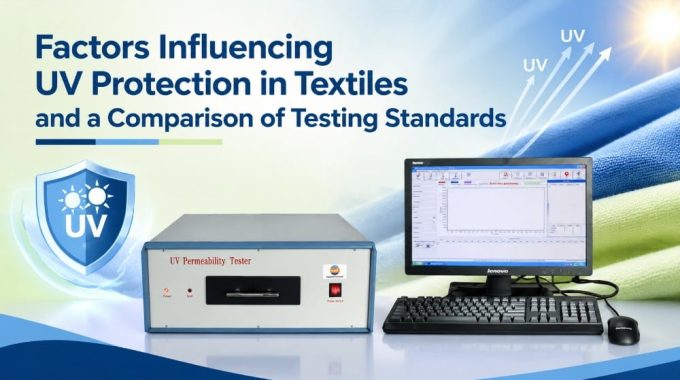
Factors Influencing UV Protection in Textiles and a Comparison of Testing Standards
Based on their wavelengths, ultraviolet (UV) rays are categorized into three regions: short-wave, medium-wave, and long-wave ultraviolet radiation. Long-wave UV, or UVA (320 nm–400 nm), can induce skin pigmentation—earning it the nickname “tanning range”—and is a contributing factor to skin aging and severe skin damage. Medium-wave UV, or UVB (280 nm–320 nm), is known as the “sunburn range”; prolonged exposure can lead to erythema (reddening), inflammation, and skin aging. Short-wave UV, or UVC (200 nm–280 nm), is absorbed by the ozone layer and does not reach the Earth’s surface. However, as human-induced damage to the ozone layer has intensified in recent years—coinciding with a rise in skin cancer cases—UVC radiation warrants serious attention.
With the emergence of UV-protective textiles, many countries have established standards to evaluate the UV-protection performance of such materials. Examples include the Chinese national standard “Evaluation of UV-protective properties of textiles” (GB/T 18830—2009), the Australian/New Zealand standard “Sun protective clothing—Evaluation and classification” (AS/NZS 4399), the European standard “Textiles—Solar UV protective properties—Part 2: Classification and marking of apparel” (EN 13758-2), and the American standard “Test Method for Transmittance or Blocking of Erythemally Weighted Ultraviolet Radiation through Fabrics” (AATCC 183). These standards differ in their scope, required sample sizes, and the reference solar spectral irradiance data used; notably, the GB/T 18830—2009 standard is technically equivalent to the EN 13758-2 standard.
Comparison of 4 Standard Test Methods
1.1 Scope
The Australian and New Zealand standard AS/NZS 4399 applies to untreated textiles in a dry and unstretched state, whereas the Chinese standard GB/T 18830—2009 applies to all textiles. The European standard EN 13758-2 covers apparel fabrics, while the American standard AATCC 183 is used to test the ability of fabrics to block or transmit ultraviolet radiation—a scope that also extends to fabrics in a wet or stretched state (though such conditions are not explicitly covered within this specific standard).
1.2 Sample Quantity

The AS/NZS 4399 standard requires 4 specimens—2 in the warp direction and 2 in the weft direction; if the sample contains different colors or structures in various areas, at least one specimen must be provided for each color and structure. The GB/T 18830—2009 and EN 13758.2 standards also require 4 specimens, with at least 2 specimens for each color and structure if the sample features variations in color or structure across different areas. The AATCC 183 standard requires 2 specimens—one in a dry state and one in a wet state—with each specimen tested at least 3 times; if the sample contains different colors or structures in various areas, at least one specimen is required for each color and structure.
1.3 Conditional Control
The AS/NZS 4399 standard does not require pre-conditioning; the test environment is defined as a temperature of 20°C ± 5°C and a relative humidity of 50% ± 20%. The AATCC 183 standard requires pre-conditioning for at least 4 hours, with a test temperature of 21°C ± 1°C and a relative humidity of 65% ± 2%. The GB/T 18830—2009 standard also requires pre-conditioning, with a test temperature of 21°C ± 2°C and a relative humidity of 65% ± 2%; if the testing apparatus is not located within a standard atmospheric environment, the time elapsed from removing the pre-conditioned specimen from its sealed container to the completion of the test must not exceed 10 minutes.
1.4 Wavelength range
The AATCC 183 standard requires a UV light source with a wavelength range of 280 nm to 400 nm, while the AS/NZS 4399 and GB/T 18830—2009 standards require a range of 290 nm to 400 nm. Although the AATCC 183 standard encompasses the 280 nm–290 nm wavelength range, light in this region has little to no impact on the test results.
1.5 Reference solar spectral irradiance
The spectral irradiance referenced in the AS/NZS 4399 standard corresponds to sunlight in Melbourne, Australia, at noon on a summer day (January 1st), while the standards GB/T 18830—2009, AATCC 183, and EN 13758.2 reference sunlight in Albuquerque, New Mexico, USA, at noon on a summer day (July 3rd).
1.6 Key Operational Points
The AATCC 183 standard requires that, when testing a specimen, the sample be rotated by an angle of 45° for the second ultraviolet (UV) transmission measurement relative to the first, and by another 45° for the third measurement relative to the second; in contrast, the AS/NZS 4399 and GB/T 18830—2009 standards do not require any such rotation during specimen testing.
1.7 Presentation of Test Results
Currently, the primary metrics for evaluating the ultraviolet (UV) protection performance of textiles include the Ultraviolet Protection Factor (UPF), UPF rating, UV (UVA and UVB) transmittance, and UV blocking rate. However, the methods for calculating and expressing results vary slightly across different test standards. The AATCC 183 standard requires calculating the mean spectral transmittance based on three measurements per sample; the test report must include the UPF, UVA transmittance, UVB transmittance, UVA blocking rate, and UVB blocking rate. Under the GB/T 18830—2009 standard, for both homogeneous and non-homogeneous samples, the lowest UPF value obtained is taken as the UPF value for the entire sample. The AS/NZS 4399 standard expresses performance using a protection rating corresponding to a specific range of UPF values. Both GB/T 18830—2009 and AS/NZS 4399 require the reporting of the UPF, UVA transmittance, and UVB transmittance.
Comparison of Actual Test Results
2.1 Materials and Instruments
Fabric samples: Sample 1 is a light blue 100% cotton fabric (14.5/14.5, 472/275); Sample 2 is a pink 100% cotton fabric (14.5/14.5, 472/314); Sample 3 is a dark blue 100% cotton fabric (11.6/11.6, 630/394); Sample 4 is a white 100% cotton fabric (14.5/14.5, 472/275).
The instrument used is the YG902 Textile Ultraviolet Prevention tester.
2.2 Experimental data
The UVA and UVB transmittance, as well as the Ultraviolet Protection Factor (UPF), of the same fabric were determined according to the test methods specified in GB/T 18830—2009, AS/NZS 4399, and AATCC 183, respectively. A higher UPF value indicates superior ultraviolet (UV) protection, whereas higher UVA and UVB transmittance values indicate poorer UV protection. The UV protection performance metrics obtained using these three test standards are presented in Table 1.
Table 1 UV protection performance metrics based on three different test standards
| Test specimen | GB/T 18830—2009 UPF | GB/T 18830—2009 UVA/% | GB/T 18830—2009 UVB/% | AS/NZS4399 UPF | AS/NZS4399 UVA/% | AS/NZS4399 UVB/% | AATCC183 UPF | AATCC183 UVA/% | AATCC183 UVB/% |
| 1# | 10.65 | 7.18 | 9.03 | 10 | 7.30 | 8.96 | 10.97 | 7.18 | 8.48 |
| 2# | 16.07 | 5.19 | 5.74 | 15 | 5.24 | 5.71 | 16.43 | 5.19 | 5.29 |
| 3# | 33.93 | 4.63 | 2.06 | 35 | 4.65 | 2.11 | 38.75 | 4.63 | 1.97 |
| 4# | 10.33 | 6.69 | 8.86 | 10 | 6.96 | 8.57 | 11.58 | 6.69 | 8.00 |
2.3 Data Analysis
(1) Testing the same specimen using the GB/T 18830—2009, AS/NZS 4399, and AATCC 183 methods yields varying results. In terms of UPF values, the order is: AATCC 183 > GB/T 18830—2009 > AS/NZS 4399.
(2) Experimental data indicate that while the UVA transmittance values are identical under the GB/T 18830—2009 and AATCC 183 standards, the UVB transmittance under GB/T 18830—2009 is higher than that under AATCC 183, with a difference ranging from 4.57% to 10.75%. Consequently, the UPF value calculated according to the GB/T 18830—2009 standard is lower than that calculated according to AATCC 183.
(3) The AS/NZS 4399 standard uses a UPF protection rating to represent the ultraviolet (UV) resistance of a fabric. As shown in Table 1, both the UVA and UVB transmittance values under the AS/NZS 4399 standard are higher than those under the AATCC 183 standard—with increases ranging from 0.43% to 4.03% for UVA and from 5.66% to 7.93% for UVB. Therefore, the UPF value calculated based on the AS/NZS 4399 standard is lower than the UPF value obtained using the AATCC 183 standard.
Factors Influencing the UV-Protective Properties of Textiles
The primary factors influencing the ultraviolet (UV) transmittance of a fabric include the type of fiber, the cover factor (porosity), the color and shade of the fabric, the treatment of the sample, and the presence of fluorescent whitening agents.
3.1 Types of textile fibers

Different types of fibers possess varying capacities for absorbing ultraviolet (UV) radiation, which in turn results in differences in their UV transmittance. Cotton/wool and cotton/cashmere blended fabrics exhibit strong UV absorption, offering excellent UV protection. In contrast, cotton and viscose fabrics have higher UV transmittance, with cupro and linen fibers performing similarly to cotton. Nylon and CVC (cotton/polyester blend) fibers allow UV radiation to pass through more easily, while pearl and bamboo fibers provide relatively good UV protection.
3.2 Coverage coefficient
The coverage factor of a fabric has a highly significant impact on its ultraviolet (UV) protection performance. For fabrics made from the same fibers and of the same color, an increase in thickness and areal density leads to a higher coverage factor and a lower porosity, which in turn results in a higher ultraviolet protection factor (UPF), as shown in Table 2.
Table 2 Relationship between coverage factor and UPF (%)
| Item | 0 | 50 | 90 | 95 |
| Fabric Porosity | 100 | 50 | 10 | 5 |
| Maximum Ultraviolet Protection Factor (UPF) | 1 | 2 | 10 | 20 |
3.3 Fabric color and shade
Dyes exhibit selective light absorption, a property determined by their specific characteristics and chemical structure. Some dyes can absorb light even within the ultraviolet (UV) range, thereby enhancing the UV protection provided by fabrics. In general, darker-colored fabrics offer better protection; black and dark blue, for instance, have lower UV transmittance.
3.4 The Impact of Fluorescent Whitening Agents
Three different fabric samples were selected: 14.5/14.5 512/315, 11.6/11.6 630/283, and 9.7/9.7 709/354. Following the test method specified in GB/T 18830—2009, both the samples treated with a fluorescent whitening agent and those left untreated were tested using a UV-1000F ultraviolet transmittance analyzer; the resulting data are presented in Table 3. The experimental results indicate that, compared to the untreated samples, the fluorescent-whitened fabrics show minimal difference in UVB transmittance, but a significant reduction in UVA transmittance. Consequently, the UPF value increases by 2–4 units, indicating improved ultraviolet protection. This occurs because fluorescent whitening agents can absorb ultraviolet light with wavelengths below 400 nm; the absorbed energy is then converted and re-emitted as violet or blue fluorescence (in the 400–500 nm range), which compensates for the violet or blue wavelengths lost due to reflection by the substrate. Thus, it can be concluded that fluorescent whitening agents serve a dual purpose: they whiten the fabric while also acting as ultraviolet absorbers. Since the peak absorption wavelength of these agents typically falls between 360 nm and 380 nm—a range that coincides with the UVA spectrum—the whitening treatment leads to a substantial decrease in UVA transmittance, while having little effect on UVB transmittance.
Table 3 UV protection performance of pure cotton fabric samples before and after fluorescent whitening treatment
| Sample | UPF (without optical brightener) | UVA % (untreated) | UVB % (untreated) | UPF (with optical brightener) | UVA % (treated) | UVB % (treated) |
| 1 | 26.71 | 8.18 | 3.18 | 28.12 | 3.70 | 3.86 |
| 2 | 31.88 | 8.63 | 2.60 | 33.38 | 3.25 | 2.79 |
| 3 | 25.51 | 8.30 | 3.52 | 29.19 | 3.13 | 3.36 |
3.5 The Impact of Organization Methods
A fabric with a construction of 14.5/14.5 (yarn count) and 531/335 (thread density) was subjected to softening, easy-care (wrinkle-resistant), and UV-protective finishing. Testing was conducted in accordance with the GB/T 18830—2009 standard using a YG902 Textile Ultraviolet Protection Tester; the results are presented in Table 4. The experimental data indicate that, compared to fabrics not treated for UV protection, the finished cotton fabric exhibits a significant reduction in the transmittance of both UVA and UVB radiation. Specifically, compared to fabric that underwent only an easy-care finish, the transmittance decreased by 50.9% for UVA and 71.6% for UVB; compared to fabric that underwent only a softening finish, the transmittance decreased by 26% and 66.9%, respectively. Furthermore, the UPF value of the sample increased substantially—from 10.54 and 12.69 (for samples without UV-protective finishing) to 34.47—resulting in a UPF rating of >30 and a UVA transmittance of 4.37%, which represents a high level of protection.
Table 4. UV protection performance of the same fabric subjected to different finishing treatments
| Finishing Methods | UPF | UVA/% | UVB/% |
| Softening finish | 12.69 | 5.91 | 7.43 |
| Easy-care (non-iron) finish | 10.54 | 8.90 | 8.67 |
| UV-protective finish | 34.47 | 4.37 | 2.46 |
3.6 The Influence of Sample Processing Status
3.6.1 Effect of sample moisture content
Sample 1 consists of one dry specimen and one wet specimen (with a moisture content of 40%), both with specifications of 11.6/11.6 630/394. Sample 2 consists of one dry specimen and one wet specimen (with a moisture content of 40%), both with specifications of 11.6/11.6 551/315. Testing was conducted in accordance with the GB/T 18830—2009 standard using a UV-1000F ultraviolet transmittance tester; the results are presented in Table 5. It can be observed that for both Sample 1 and Sample 2, the ultraviolet transmittance is higher in the wet state than in the dry state: the UVA transmittance increased by 141% and 107.5%, respectively, while the UVB transmittance increased by 84.6% and 116.1%, respectively. This indicates that wet fabrics offer inferior ultraviolet protection compared to dry fabrics. This is primarily because the moisture present between the yarns and fibers of a wet fabric diminishes the scattering effect on ultraviolet radiation, thereby increasing the fabric’s ultraviolet transmittance.
Table 5 Effect of sample treatment status on UV protection performance
| Item | Sample 1 (Dry) | Sample 1 (Wet) | Sample 2 (Dry) | Sample 2 (Wet) |
| UPF | 32.37 | 15.80 | 14.84 | 7.11 |
| UVA/% | 2.73 | 6.58 | 4.09 | 8.49 |
| UVB/% | 2.61 | 4.82 | 6.01 | 12.99 |
3.6.2 The Effect of Washing on UV Protection Performance
For a fabric sample with specifications of 14.5/14.5 512/315, testing was conducted in accordance with the GB/T 18830—2009 standard using a UV-1000F ultraviolet transmittance tester; the resulting data are presented in Table 6. The tests indicate that the fabric’s ultraviolet protection performance remains largely unchanged as the number of wash cycles increases.
Table 6 Changes in UV protection performance of fabrics after 30 wash cycles
| Item | Before washing | 5 washes | 10 washes | 20 washes | 30 washes |
| UPF | 11.29 | 11.79 | 11.94 | 10.40 | 11.46 |
| UVA/% | 7.26 | 6.69 | 6.48 | 7.90 | 6.92 |
| UVB/% | 8.74 | 8.16 | 8.08 | 9.45 | 8.41 |
Conclusion
Ultraviolet (UV) protection test standards—namely AS/NZS 4399, GB/T 18830, and AATCC 183—differ in terms of their scope, required sample size, conditioning requirements, reference spectral irradiance, and operational procedures. Notably, the GB/T 18830 standard is equivalent to EN 13758.2. When testing the same fabric, the UPF value obtained via the AATCC 183 standard is higher than that obtained via GB/T 18830; meanwhile, the AS/NZS 4399 standard—which also utilizes a UPF rating—yields a lower value than AATCC 183. Several factors influence a fabric’s UV protection performance: lower porosity and darker colors generally enhance UV protection. The application of fluorescent whitening agents can increase the UPF value by 2 to 4 units. Furthermore, fabrics offer significantly less UV protection when wet compared to their dry state, while repeated laundering has minimal impact on UV protection performance. Fabrics treated with specific UV-protective finishes exhibit the highest level of UV protection; among various finishing processes, those involving softeners perform better than those involving easy-care (non-iron) treatments.
Reference: SHANGHAI TEXTILE SCIENCE & TECHNOLOGY (2010 Vol.38 No. 10)— “Factors Influencing UV Protection in Textiles and a Comparison of Testing Standards”. If any copyright infringement is detected, please contact us.