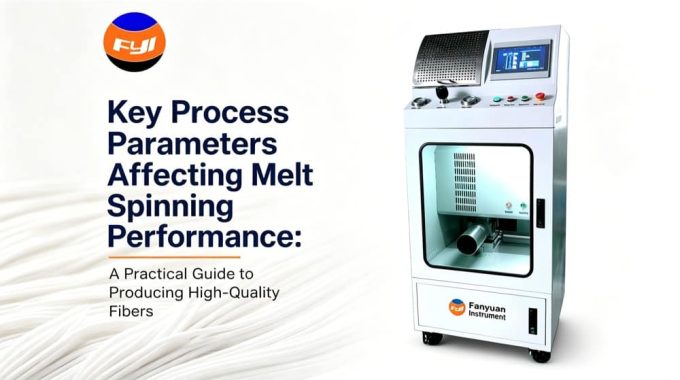
Key Process Parameters Affecting Melt Spinning Performance: A Practical Guide to Producing High-Quality Fibers
The results of the melt spinning process reflect the control of all of the processing parameters, ranging from polymer melting to fiber winding. The fiber diameter, mechanical property of the fiber, production efficiency, and product quality can be influenced by these small changes in temperature/pressure, cooling, or draw ratio. These variables, whether in the lab or production, enable you to produce consistent, high-performance fibres and minimize waste and downtime.
This guide will teach you about the most important process parameters affecting melt spinning, how to optimize fiber diameter, frequently occurring problems in the melt spinning machines and their solutions, how to optimize production efficiency, and key quality control aspects of polymer melt spinning.
8 Key Process Parameters Affecting Melt Spinning Performance
1. Polymer Melt Temperature
The viscosity of the polymer during the extrusion is affected by the melt temperature. Low temperatures make it easier to melt and put more pressure on the melt, but too high temperatures can affect the polymer. Maintain process within the recommended temperature range to avoid variations in fiber properties and flow.
2. Melt Pressure and Extrusion Stability
Stable melt pressure results in even polymer flow through the spinneret. Inconsistent feedings, temperature changes, or a partial blockage of the spinneret are usually the culprit for pressure changes. When the machine is monitoring continuously, it can avoid diameter changes and filament breakage.
3. Screw Speed and Polymer Throughput
The material output and the melting speed are dependent on the speed of the screw. Fast speeds can cause undue shear heat, and slow speeds will decrease productivity. Choose a speed that will not impact polymer quality but will give stable throughput.

4. Metering Pump Accuracy
A constant polymer flow is provided to the spinneret through the metering pump. The uniform filaments obtainable with accurate flow control result from a consistent fiber diameter that is not affected by flow variations, which also cause spinning conditions to be unstable.
5. Spinneret Design and Hole Geometry
The size and shape of the spinneret hole, the length-to-diameter ratio, and the number and location of spinneret holes have an impact on polymer flow and filament formation. Precise, clean spinnerets create uniformity of fibres and minimize processing defects.
6. Cooling and Quenching Conditions
Newly extruded filaments are solidified prior to drawing by controlled cooling. Asymmetrical air flow, or a lack of uniform cooling, can result in distortion, non-uniform diameter, or residual stresses in fibers.
7. Draw Ratio and Molecular Orientation
Drawing will align polymer molecules along the fiber axis, thus increasing the tensile strength and modulus. Too low a draw ratio results in poor mechanical properties, and too high a draw ratio results in higher chances of filament breakage.
8. Winding Speed and Tension Control
The speeds of the winding, extrusion, and drawing should be equal. Stable tension, which will not allow the fiber to stretch, relax, or cause packages to become defective, will maintain uniform product length and width.

How to Optimize Fiber Diameter in Melt Spinning
Balance Polymer Viscosity
Keep the melt temperature constant to obtain a uniform viscosity. The uniform viscosity gives the extrusion process a stable process and reduces the diameter variation.
Optimize the Draw Ratio
Change the draw ratio as per the specification of the polymer grade and the target fibre specification. With proper drawing, the fibers will be uniform, and the mechanical properties will be improved.
Maintain Uniform Cooling
Set the same quench throughout all filaments. A uniform cooling process results in uniformity in the solidification process and also minimizes variations in diameter.
Monitor Take-Up Speed
Match up the speed of take-up to the speed of the extruder. Winding speed error will cause the filament to be attenuated and directly influence the diameter of the fiber.
Use Real-Time Process Monitoring
Continuously monitor the temperature, pressure, flow rate, and winding speed. Process deviations are minimized, and production is more consistent, when they are detected early.
5 Common Problems in Melt Spinning Machines and Solutions
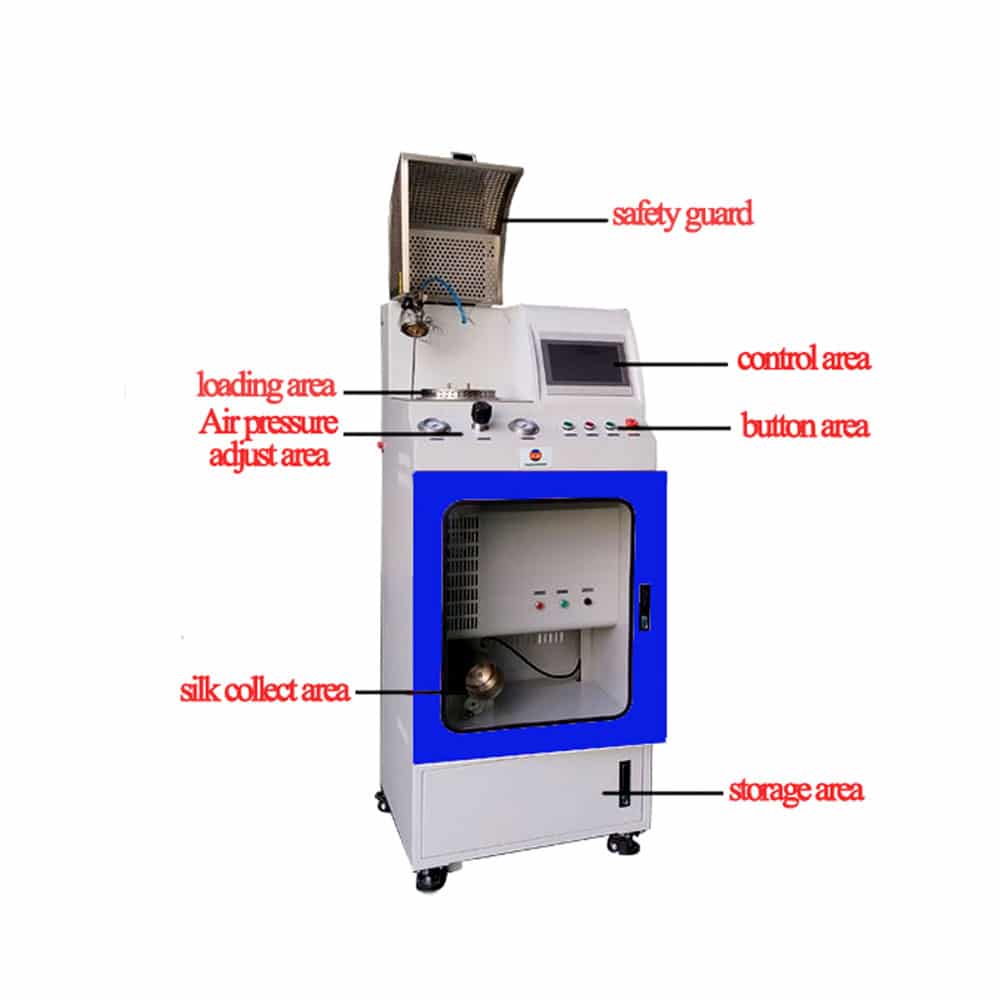
Even if a well-designed melt spinning machine is available, some production problems may arise when the process parameters are not stable and/or the equipment is not maintained properly. Early diagnosis of the issue can reduce downtime, minimize material waste, and assure the consistency of fibre quality. Check our machine specifications here.

1. Filament Breakage
What Causes Filament Breakage?
In the case of filament breakage, it is because the extruded fibers are not able to withstand the tension applied during drawing or winding. These can be caused by too high a draw ratio, unstable winding tension, low polymer quality, temperature variation in the melt, contaminated raw materials, or blocked spinneret holes. Production is halted and material is wasted because of frequent filament breaks.
How to Solve It
Keep the melt temperature and pressure constant, optimize the draw ratio according to polymer grade, and keep the same winding tension. To ensure that continuous filament is formed, regularly clean the spinneret, ensure that polymers are properly dried and filtered, and ensure that the drawing system does not have worn rollers or that some rollers are misaligned.
2. Spinneret Clogging
Why Does the Spinneret Become Clogged?
Clogged spinners occur when the polymer has broken down, there are contaminants in the polymer, carbonized material, or unmelted particles that get trapped in the spinneret holes. This partial blockage causes an uneven flow of polymer, pressure variations, and frequent interruptions in production.
How to Solve It
Ensure an efficient melt filtration system is installed and that clean, dry raw materials are used. Regularly clean the spinneret with recommended melt spinning methods and ensure that processing temperatures are not excessive to avoid polymer degradation. Regularly check the spinneret for wear or damage to ensure uniform extrusion.
3. Uneven Fiber Diameter
What Causes Diameter Variation?
The causes of inconsistent fiber diameter are generally due to an unstable melt pressure, varying extrusion rates, cooling airflow variation, inaccurate output of the metering pump, or changes in winding speed. Diameter variation has a negative influence on mechanical performance, downstream processing, and product quality.
How to Solve It
Ensure the extrusion pressure is stable and the amount of polymer extruded is stable by periodically calibrating the metering pump. Make sure cooling is even and maintain a feed speed in relation to the eventual output of the filaments. Continuous process monitoring can identify variations in the process before negative impacts on product quality occur.
4. Polymer Degradation
Why Does Polymer Degrade During Melt Spinning?
The excessive processing temperature or prolonged residence time of the polymer in the extruder causes degradation. Thermal degradation will decrease the molecular weight, tensile strength, and melt viscosity, and can cause discoloration or gels, which will alter fiber quality.
How to Solve It
Do not exceed the recommended processing temperature and keep the polymer in the extruder for the least amount of time. Dry moisture-sensitive polymers prior to processing, and do not need to stop production when the polymer melt is being exposed to unnecessary extended heating time. Monitor temperature profile(s) in the extrusion system regularly.
5. Poor Winding Quality
What Causes Poor Winding?
Winding that is poor is a loose package, uneven layers, overlapping filaments, or collapsed bobbins. The problems occur due to the unstable winding tension, winding take-up speed, package formation, and inconsistent filament tension during winding.
How to Solve It
Adjust the winding speed in accordance with the rate of extrusion and drawing with a constant tension on the filament. Regularly check winding equipment, adjust tension control equipment, and replace worn guides or rollers as needed. Good winding control provides package stability and facilitates efficient downstream processing.
Production Efficiency in Melt Spinning Lines
Reduce Material Waste
Ensure stable operating conditions and to optimise start-up procedures in order to reduce the amount of off-specification fibres and loss of raw material.
Improve Process Stability
Maintaining tight control of the process minimizes production disruptions, maximizes product quality, and maximizes equipment utilization.
Automate Critical Process Controls
The automatic temperature, pressure, and speed control ensures repeatability and minimizes operator manipulation.
Implement Preventive Maintenance
Carefully monitor heaters, pumps, filters, spinnerets, and sensors regularly to avoid any equipment failure.
Optimize Energy Consumption
Implement effective use of energy-efficient heating systems, insulated equipment, and optimized processing temperatures to minimize energy use, while maintaining product quality.
Quality Control for Melt Spun Fibers
Fiber Diameter Consistency
Continually or periodically sample and measure for fiber diameter to meet product requirements.
Tensile Strength and Elongation
Test mechanical properties to ensure that the molecule is oriented and the fiber is performing as expected.
Surface Appearance Inspection
Check fibers for gels, contamination, broken fibers, and any surface blemishes that could impact downstream processing.
Thermal Property Evaluation
Test melting characteristics and crystallinity for processing uniformity and material stability.
Process Data Monitoring
Capture and analyse important process parameters, report trends, and enhance traceability and continuous optimization of the process.
Conclusion
Precise control of all stages of the melt spinning process is crucial for high-quality polymer melt spinning. Adjusting the melt temperature, melt pressure, cooling, drawing, and winding conditions to optimize the fibre quality, increase the production efficiency, and minimize the manufacturing defects. Optimization of processes coupled with periodic quality control should enable your melt spinning machine to produce a consistent and repeatable performance, both in the laboratory and in industrial applications.
Frequently Asked Questions
What is a melt spinning machine?
A melt spinning machine is a machine that melts thermoplastic polymers and extrudes them through a spinneret to get continuous polymer fibres, which are then cooled, drawn, and wound.
Which polymers are suitable for polymer melt spinning?
The most common polymers are polypropylene (PP), polyethylene (PE), polyethylene terephthalate (PET), nylon (PA6/PA66), PBT, PLA,, and some high-performance thermoplastics such as PEEK.
Why is quality control important for melt-spun fibers?
Quality control provides a uniformity in fibre diameter, strength, and structure. It minimizes defects, stabilizes production, and assures performance in research or industry applications.
What factors affect fiber diameter during melt spinning?
The fiber diameter is affected by melt temperature, extrusion rate, draw ratio, cooling conditions, spinneret design, and winding speed. Diameter variation occurs if there are any fluctuations in these parameters.